
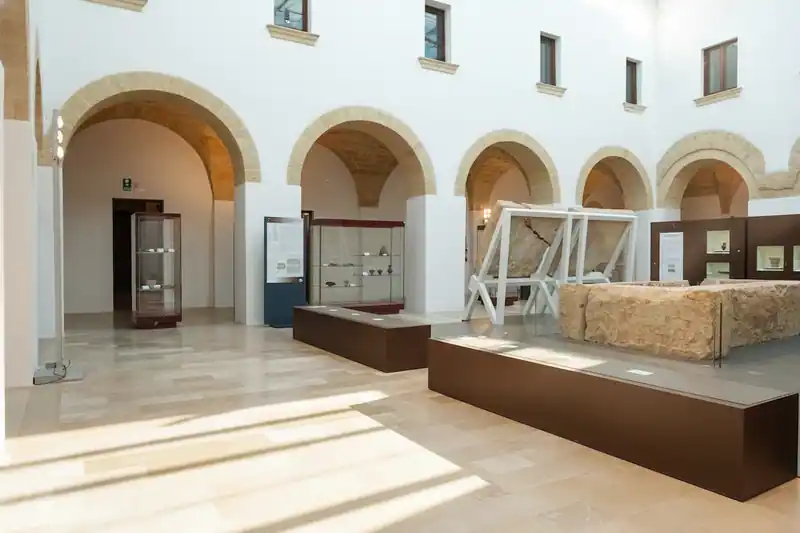
In the quiet streets of Ugento, a town perched between olive groves and the Ionian Sea, the Nuovo Museo Archeologico opens a window into millennia of Mediterranean civilization. This isn't a dusty hall of relics—it's a curated conversation with the ancients, where every artifact whispers stories of Greek settlers, Roman conquerors, and the layers of culture that shaped this corner of Puglia.
A Treasury of Ancient Voices
The museum's collection spans the Greek and Roman periods, when Ugento—known then as Uxentum—was a thriving port and crossroads of trade. You'll find amphorae that once carried wine across the Mediterranean, bronze figurines that adorned household shrines, and inscribed stones that marked civic life. Each piece is more than an object; it's a fragment of daily existence, religious devotion, or political power frozen in time.
The displays are thoughtfully arranged to guide you through the town's evolution, from its Messapian roots through Greek colonization to Roman rule. The narrative is accessible yet rich, inviting both casual visitors and history enthusiasts to linger and imagine.
Highlights That Stop You in Your Tracks
Certain pieces command attention the moment you step into their gallery. Look for the intricately decorated pottery that reveals ancient aesthetic sensibilities, the votive offerings that illuminate spiritual life, and the architectural fragments from temples and public buildings that once defined the urban skyline.
- Messapian ceramics with geometric patterns that predate Greek influence
- Roman portrait busts that capture individual personalities across centuries
- Bronze coins and jewelry showcasing craftsmanship and trade networks
- Funerary inscriptions that offer poignant glimpses into family life and social structure
Weaving the Museum into Your Ugento Day
The museum sits in the centro storico, making it easy to fold into a morning or afternoon stroll. After exploring the galleries, wander the adjacent lanes where medieval and Baroque layers overlay the ancient grid. The Cathedral of Santa Maria Assunta is just steps away, and the town's defensive walls still trace the perimeter of the old settlement.
For a fuller picture, pair your visit with a drive to the nearby coast—Torre San Giovanni lies just a few kilometers west, where you can walk the beach that ancient traders once navigated. Heading inland, the olive groves and masserie of the Ugento hinterland offer a taste of rural Puglia that has changed surprisingly little since Roman times.
When to Visit for the Best Experience
Spring and early autumn bring comfortable temperatures and fewer crowds, letting you absorb the exhibits at your own pace. Summer visitors will appreciate the museum's cool, shaded rooms as a midday retreat from the coastal sun. The intimate scale means you can cover the entire collection in an hour or two, though true enthusiasts may want to budget extra time for close study of the inscriptions and ceramics.