
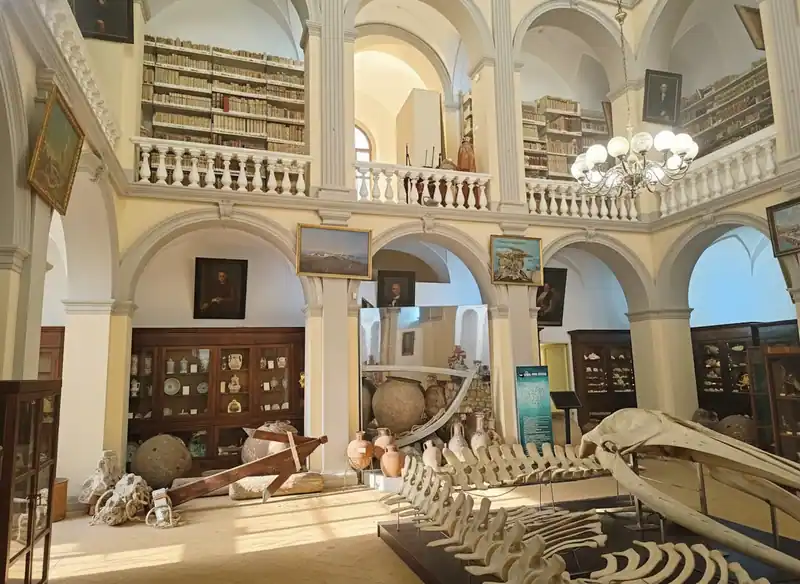
Tucked within the baroque heart of Gallipoli's historic island quarter, the Museo Civico Emanuele Barba offers a quiet journey through millennia of coastal civilization. Named after a devoted local scholar, this collection transforms stone fragments, painted panels, and maritime relics into a living narrative of the town's layered identity. For anyone curious about what lies beneath the sunlit beaches and bustling lungomare, this museum is the keyhole.
Layers of Time Beneath Your Feet
The ground floor unveils Gallipoli's ancient past, with Greek and Messapian ceramics that predate Roman conquest. Amphorae still bear the ghost of olive oil shipped across the Mediterranean, a trade that made this port wealthy for centuries. Each shard, each bronze fibula, whispers of sailors, merchants, and the strategic importance of this limestone island jutting into the Ionian Sea.
Upstairs, the focus shifts to the medieval and baroque eras devotional paintings, processional standards, and the intricate woodwork that once adorned the town's many chapels. The juxtaposition is striking: from pagan tombs to gilded saints, all under one palazzo roof.
Art That Speaks the Local Dialect
The museum's art collection isn't a parade of grand names; it's a gallery of regional masters and anonymous craftsmen whose work defined the visual language of the old kingdom of Naples. Look for the Renaissance panel depicting the town's patron saints, rendered with a tender realism that feels almost conversational. These aren't distant icons they're neighbors immortalized in tempera and gold leaf.
- Messapian pottery with geometric patterns that feel strikingly modern
- Baroque religious art from local churches, glowing with southern light
- Maritime maps and ship models that trace trade routes to Greece and North Africa
- Coins and seals documenting the town's shifting allegiances over two millennia
Beyond the Display Cases
Visit in the late morning when natural light floods the upper galleries, casting shadows that animate the sculptures. The museum is small enough to absorb in an hour, making it an ideal prelude to a walk along the bastions or a lunch of scapece in the old town. Combine your visit with the nearby Cathedral of Sant'Agata and the underground olive oil press at Frantoio Ipogeo for a full immersion in Gallipoli's layered history.
The staff are often eager to share stories that didn't make it onto the labels ask about the mysterious sarcophagus fragments or the provenance of the Byzantine coins. This isn't a museum that shouts; it rewards the curious with details that linger long after you've returned to the sunlit streets.