
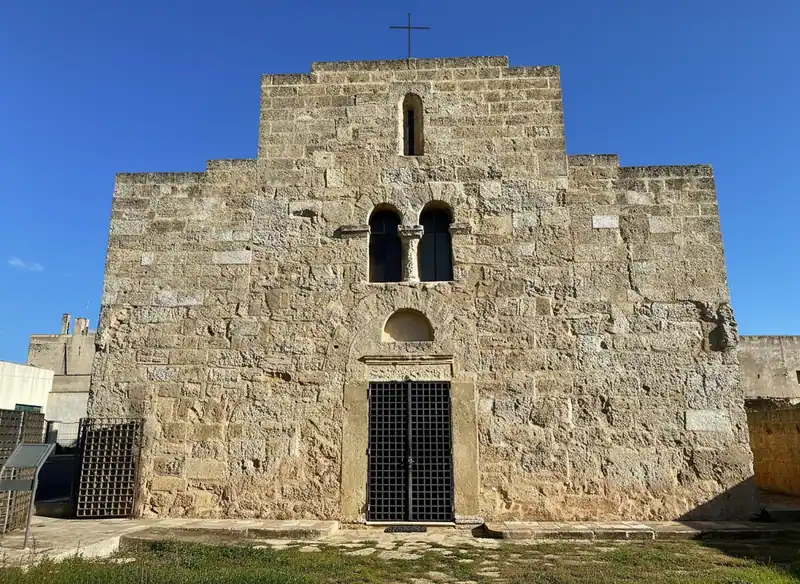
In the heart of Patù, a small town on the Ionian coast of southern Puglia, stands Centopietre a church unlike any other. Built entirely from massive rectangular stone blocks, this humble sanctuary invites visitors to pause, breathe, and step back into a quieter chapter of history. Its name, meaning "one hundred stones," hints at the mystery and ancient craftsmanship that have shaped this sacred space.
Stones That Tell a Thousand Stories
Centopietre's walls are a patchwork of repurposed Roman and early medieval stones, each block a fragment of the region's layered past. Scholars believe the church was constructed around the 9th or 10th century, possibly atop earlier ruins. The rectangular plan and austere facades speak to a time when faith was expressed through simple, enduring materials rather than ornament.
Walk around the exterior and you'll notice inscriptions, faint carvings, and weathered Latin phrases echoes of the people who quarried, carved, and consecrated these stones centuries ago. The building feels less like a monument and more like a testimonianza, a living witness to Puglia's Byzantine and Lombard heritage.
A Sanctuary of Silence and Light
Step inside, and the atmosphere shifts. Sunlight filters through narrow slits in the thick stone walls, casting soft geometric patterns across the floor. The interior is spare no frescoes, no gilding yet the sense of peace is profound. The cool air, the weight of the stone, and the echo of your footsteps all contribute to a meditative quiet that feels rare in our noisy world.
This is a place that rewards slow looking. Notice the way the stones fit together without mortar in some sections, or the way the low ceiling creates an intimate, almost protective space. It's easy to imagine medieval pilgrims seeking refuge here, or local families gathering for simple Mass under the same vaulted stone.
What to Experience at Centopietre
- Architectural curiosity: Trace the recycled Roman columns and carved capitals embedded in the walls
- Photographic angles: The low afternoon light brings out the texture of the stone and creates dramatic shadows
- Local context: Combine your visit with a walk through Patù's old town and the nearby 9th-century monument Centopietre Menhir
- Quiet reflection: Few tourists venture here, so you'll often have the space entirely to yourself
- Seasonal timing: Spring and autumn offer mild weather and wildflowers blooming around the church grounds
Weaving Centopietre into Your Journey
Patù sits just a few kilometers inland from the azure waters of Torre Vado and Pescoluse, two of the Ionian coast's most loved beaches. After a morning of swimming, the cool stone interior of Centopietre offers a welcome contrast a chance to dry off, reset, and connect with something older than memory.
The church also pairs beautifully with a visit to nearby Leuca, where the Adriatic and Ionian seas meet, or the baroque splendor of Gagliano del Capo. Art lovers and history buffs will appreciate how Centopietre complements the region's better-known Byzantine frescoes and Romanesque crypts, offering a rawer, less polished glimpse into Puglia's sacred architecture.