
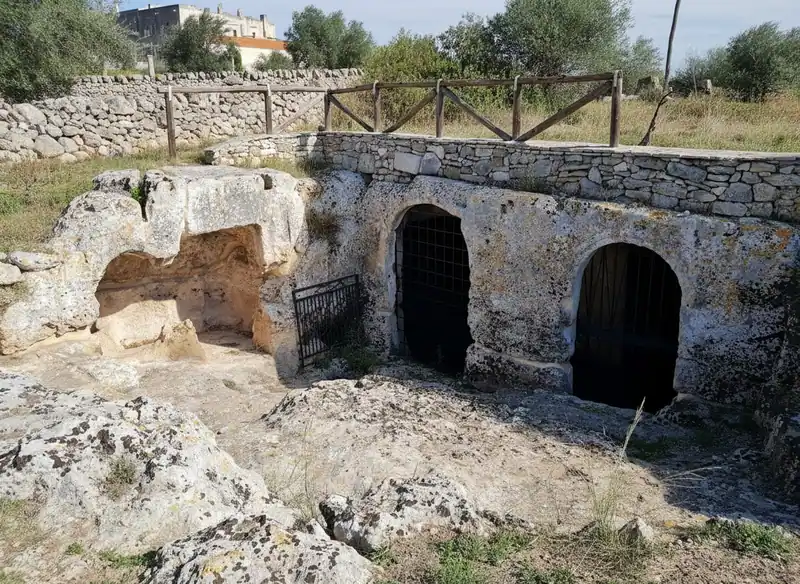
Hidden among the limestone ravines of Mottola's countryside, the Villaggio Rupestre di Casalrotto emerges like a silent testimony to centuries of human resilience. This ancient rock settlement, carved directly into the pale stone, offers a rare glimpse into the lives of communities who made these caves their home from prehistoric times through the medieval period. The site stands as one of Puglia's most evocative archaeological treasures, where every carved doorway and weathered chamber tells a story of adaptation and survival.
A Village Carved from Stone
Walking through Casalrotto feels like stepping into a sculptural landscape where nature and human ingenuity intertwine. The limestone dwellings cascade down the ravine walls, their facades shaped by centuries of careful excavation. Each cave room preserves the marks of the tools that created it, and many retain their original hearths, storage niches, and drainage channels.
The settlement's layout reveals a sophisticated understanding of the terrain. Families carved multi-level homes into the rock face, creating naturally insulated spaces that stayed cool in summer and protected from winter winds. Some structures still show traces of affreschi and carved crosses, remnants of the medieval Christian communities who repurposed these ancient shelters.
Reading the Layers of Time
What makes Casalrotto particularly fascinating is its stratification of occupation. Archaeological evidence suggests the site was inhabited as early as the Neolithic period, then continuously reused and adapted through Greek, Roman, and medieval eras. The deeper caves show the simplest forms of habitation, while later additions include more refined architectural details like arched doorways and ventilation shafts.
As you explore, notice the variety in cave sizes and functions. Some were clearly residential, with sleeping platforms carved into the walls. Others served as storage for grain and oil, their cool temperatures acting as natural refrigeration. A few larger caverns likely functioned as communal gathering spaces or places of worship.
What to Look For
- Tool marks on the cave walls that reveal ancient excavation techniques
- Water collection systems carved into the rock to channel rainwater
- Medieval crosses and inscriptions etched into doorway lintels
- Natural ventilation holes that kept the dwellings livable year-round
- Terracing remnants where inhabitants once cultivated crops on the ravine slopes
Beyond the Settlement Walls
The surrounding landscape amplifies the experience of Casalrotto. The ravines around Mottola shelter several other villaggi rupestri, and the area's network of ancient trails connects these settlements through wild Mediterranean scrubland. Springtime brings wildflowers that soften the austere stone, while autumn light turns the limestone golden.
Consider combining your visit with the nearby Villaggio Petruscio, another rock settlement just a few kilometers away, or explore Mottola's historic center, where the Chiesa Madre preserves stunning medieval frescoes. The drive through the Murgia hills offers sweeping views of olive groves that have been cultivated since ancient times, connecting you to the same agricultural traditions that sustained Casalrotto's inhabitants.