
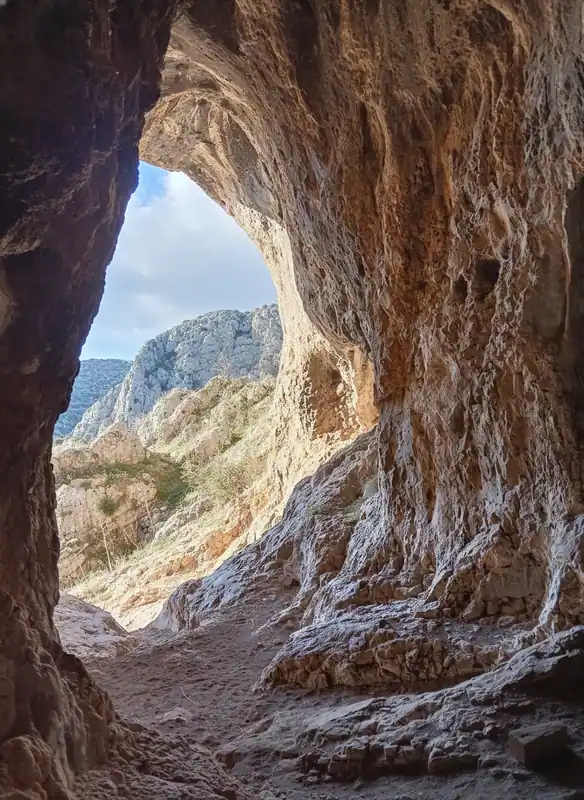
Hidden within the rugged slopes near San Giovanni Rotondo, Valle dell'Inferno is a striking limestone cave that draws adventurous souls into a world carved by millennia of water flow. The descent into this natural gorge reveals a landscape where geology and legend intertwine, and every chamber whispers stories written in stone. It's a place where the drama of the Gargano Peninsula unfolds beneath your feet.
Descending into Ancient Stone
The trail leading into Valle dell'Inferno winds through scrub oak and Mediterranean maquis before plunging into a narrow valley where sheer limestone walls rise on either side. As you step deeper, the temperature drops and the light softens, filtering through gaps in the rock overhead. The cave's name—Valley of Hell—belies the quiet beauty you'll find inside: vaulted chambers, curtains of flowstone, and delicate mineral deposits that catch the faintest glow.
Water has been the artist here, sculpting passages and alcoves over countless centuries. You'll walk through corridors where stalactites hang like frozen icicles and the ground underfoot is polished smooth by ancient streams.
What to Bring and When to Go
This is a trek best suited to spring and autumn, when temperatures are mild and the risk of flash flooding is low. Summer heat can make the descent uncomfortable, while winter rains may render sections of the trail slippery or impassable. Sturdy boots with good ankle support are essential—the path is uneven, rocky, and at times steep.
- Wear layers: the cave interior is noticeably cooler than the exposed hillside
- Bring a headlamp or strong torch to explore the deeper chambers safely
- Pack plenty of water and snacks; there are no facilities along the route
- Allow at least three hours for the round trip, including time to rest and photograph the formations
- Check weather forecasts carefully—avoid the trail after heavy rain
Connecting the Dots on the Gargano
San Giovanni Rotondo is best known as a pilgrimage destination, home to the sanctuary of Padre Pio. But Valle dell'Inferno offers a counterpoint—a chance to trade crowded churches for solitude among the stones. After your cave trek, consider exploring the nearby Foresta Umbra, a dense beech forest that feels almost Alpine, or drive down to the coast at Vieste, where white cliffs meet the turquoise Adriatic.
The cave is part of a network of karst features that make the Gargano one of southern Italy's most geologically rich areas. Locals have long known these hidden valleys, and you'll often encounter shepherds or foragers who can point out other secret spots worth discovering.