
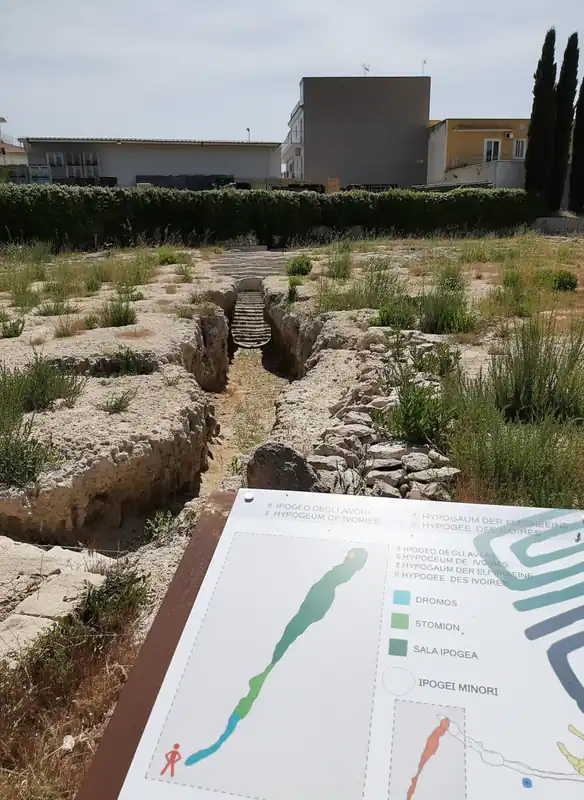
Beneath the modern streets of Trinitapoli lies a hidden world carved into bedrock millennia ago. The Parco Archeologico degli Ipogei invites visitors to descend into a network of underground chambers that served as sanctuaries, storage spaces, and sacred burial sites for ancient communities. This isn't a monument that towers above the landscape it's one that pulls you down into the cool, silent earth where history feels immediate and tangible.
A Journey Through Rock-Cut History
The hypogean structures at this archaeological park date back thousands of years, offering a rare glimpse into the daily and spiritual lives of prehistoric inhabitants. These aren't grand tombs or palatial ruins; they're intimate spaces hewn by hand, chamber by chamber, revealing the ingenuity of people who shaped their world vertically as much as horizontally.
Walking through the dimly lit passages, you'll notice tool marks still visible on the walls evidence of the painstaking labor required to create these spaces. The cool air and earthy scent transport you far from the Puglian sunshine above, immersing you in an environment preserved by its very isolation.
- Rock-cut chambers that show the evolution of settlement patterns over centuries
- Burial niches arranged with care, hinting at ritual practices and reverence for the dead
- Storage alcoves that speak to the pragmatic needs of early communities
- Carved stone benches suggesting spaces for communal gathering or ceremony
What Makes This Site Special
Unlike coastal ruins or hilltop fortresses, the Parco Archeologico degli Ipogei offers something rare: a wholly subterranean archaeological experience. The preservation is remarkable centuries underground have protected carvings, niches, and structural details from weathering. The quiet, contained atmosphere makes every detail feel intentional and significant.
The park's interpretation panels help contextualize what you're seeing, linking these chambers to broader patterns of Neolithic and Bronze Age life in Puglia. It's a place that rewards slow observation, where the absence of grand spectacle gives way to subtle discoveries in every corner.
Visiting Tips and Nearby Discoveries
Plan to spend at least an hour exploring the chambers and absorbing the interpretive materials. Bring a light jacket the underground temperature stays noticeably cooler than the surface, even in summer. Photography is allowed, but the low light means a steady hand or tripod helps capture the atmospheric interiors.
Trinitapoli itself is worth a stroll after your underground adventure. The town's compact historic center features modest baroque architecture and local trattorie where you can sample regional dishes. If you're intrigued by ancient history, consider pairing your visit with a trip to the nearby Pulo di Molfetta or the dolmens scattered across the Puglian countryside together, they paint a picture of a landscape rich in prehistoric activity.
- Visit in the morning for a quieter, more contemplative experience
- Wear comfortable, closed-toe shoes floors can be uneven
- Allow time to read the interpretive panels; they add crucial context
- Combine with a visit to Barletta or Margherita di Savoia, both within 20 km
The Parco Archeologico degli Ipogei is a reminder that Puglia's history isn't just written in sun-drenched piazzas and seaside fortresses. Sometimes, the most compelling stories are the ones carved quietly into the earth, waiting for curious travelers to descend and listen.