
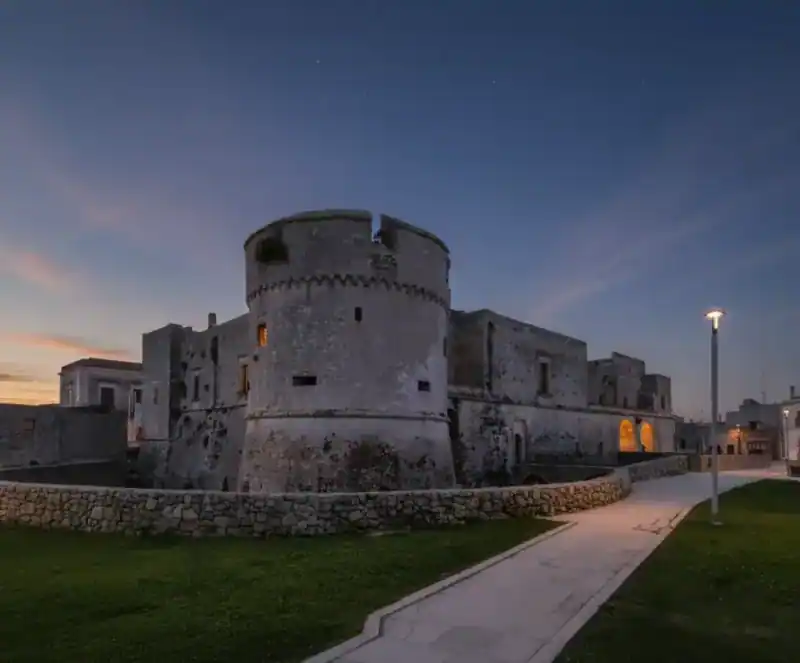
In the heart of Andrano, a fortified sentinel rises from the Piazza Castello, its stone walls whispering tales of centuries past. The Spinola-Caracciolo Castle stands as a testament to the defensive architecture that once protected this corner of Puglia's Adriatic coast. Walking through its entrance feels like stepping into a living chronicle of power, protection, and perseverance.
Stone Walls That Have Seen Centuries
The castle's fortifications are not mere relics; they are architectural narratives carved in local stone. Each tower and bastion was designed with purpose, offering strategic vantage points over the surrounding landscape. The defensive structures speak to an era when coastal towns like Andrano needed to watch the horizon for approaching threats.
As you trace the perimeter of the ancient stone walls, notice how the light plays across the weathered surfaces. The texture of the limestone tells its own story, shaped by salt air and centuries of Mediterranean sun.
A Living Monument in the Town Center
What makes this castle especially captivating is its integration into Andrano's daily life. Unlike isolated ruins, Spinola-Caracciolo remains a central presence in the piazza, surrounded by the rhythms of a working town. Morning coffee aromas mingle with history; evening passeggiate unfold in its shadow.
The castle's towers offer a unique perspective on how defensive architecture shaped urban planning in southern Puglia. From certain angles, you can see how the town grew organically around this fortified core.
Layers of History in Every Stone
The name itself—Spinola-Caracciolo—hints at the noble families who left their mark on this structure. Each modification, each addition to the original fortress, represents a different chapter in the region's complex feudal history. The architectural stratification is visible in the varying styles of stonework and defensive features.
- Imposing defensive towers that once surveyed the coast for Ottoman raiders
- Original mura (walls) built with massive limestone blocks
- Architectural details that blend medieval strength with later Renaissance refinements
- Strategic positioning that speaks to Andrano's importance on the Adriatic trade routes
Making the Most of Your Visit
The best time to photograph the castle is late afternoon, when the golden light warms the stone facade and casts dramatic shadows across the courtyard. After exploring, wander the narrow streets of Andrano's centro storico, where you'll find smaller noble palaces and churches that complement the castle's story.
Combine your visit with a trip to nearby Castro, just seven kilometers down the coast, where a clifftop castle offers equally dramatic views. The drive between the two takes you through ancient olive groves and past weathered masserie that seem unchanged since the castle's heyday. Pack comfortable walking shoes—the piazza's cobblestones are authentic, uneven, and utterly charming.