
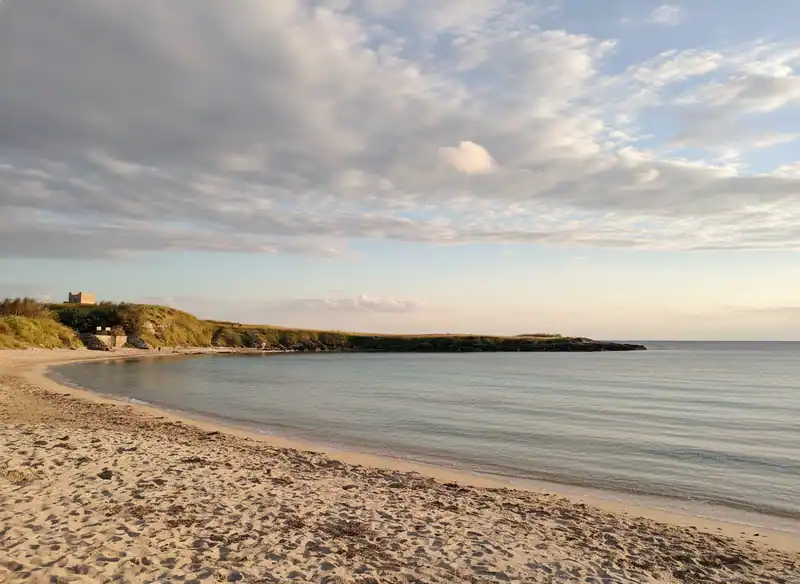
Tucked along the Ionian coastline of Leporano Marina, Spiaggia di Saturo unfolds as a rare blend of soft sand, jagged rock formations, and water so clear you can count the pebbles below. This is the kind of beach that surprises first-time visitors: no entrance fees, no rows of umbrellas, just raw coastal beauty and the freedom to claim your own patch of shore.
Where Sand Meets Stone
The beach stretches in a gentle arc, framed on both sides by weathered limestone outcrops that glow amber in the afternoon sun. These natural sculptures create sheltered pockets where the water stays calm even when the breeze picks up. Families spread towels on the sand, while snorkelers drift along the rocky edges, peering into underwater crevices alive with silver fish and sea urchins.
The sand here is fine and golden, warm underfoot but never scorching. At the waterline, smooth stones mix with shell fragments, polished by centuries of waves.
Swimming in Liquid Glass
The real star at Saturo is the crystalline Ionian water, which shifts from pale turquoise in the shallows to deep sapphire beyond the rocks. Entry is gradual and sandy, making it easy for children and less confident swimmers to wade in. Beyond the first sandbar, the seabed drops gently, revealing patches of seagrass and the occasional curious crab.
- Bring snorkeling gear to explore the rocky zones on either side of the main beach
- Arrive before 10 a.m. in July and August to secure a prime spot near the rocks
- Pack a cooler—there are no beach clubs here, just nature and your own provisions
- Wear water shoes if you plan to scramble over the outcrops at low tide
Beyond the Beach
Leporano Marina is a sleepy fishing village where time moves at the pace of the tide. After a morning at Saturo, wander into the village for a late lunch at one of the family-run trattorie, where the catch of the day is still being cleaned on the dock. The ruins of the ancient Greek settlement of Saturo lie just a short walk inland, perched on a hill with sweeping views of the gulf—a haunting reminder that this coastline has drawn visitors for millennia.
To the west, the coastal road winds toward Taranto, where the Città Vecchia hides Byzantine churches and baroque palaces. To the east, the beaches grow wilder and the crowds thinner, perfect for those chasing solitude.
When to Come
June and September offer the best balance: warm water, fewer crowds, and that golden Mediterranean light that makes every snapshot look like a postcard. Weekdays are quieter than weekends, and early mornings gift you the beach almost to yourself, with only the gulls and the occasional fisherman casting lines from the rocks.