
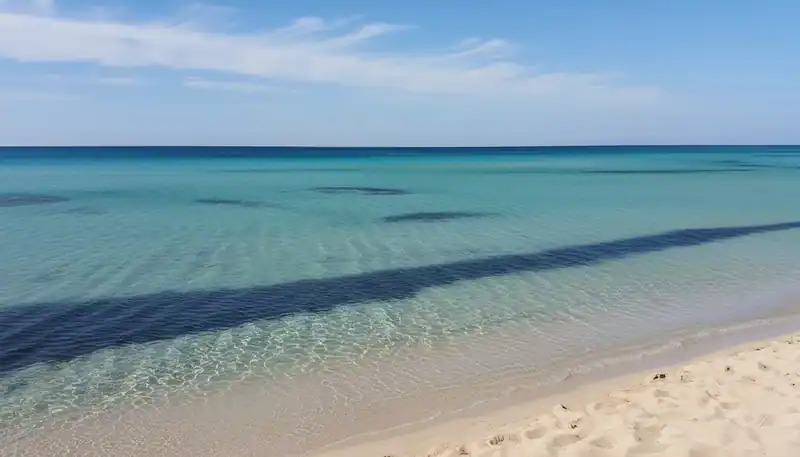
Tucked along the Ionian shoreline near San Pietro in Bevagna, Spiaggia del Chidro offers a refreshing escape from the more crowded beaches of Puglia. This free-access stretch of sand and sea feels like a local secret, where the rhythm of the waves sets the pace and the view stretches uninterrupted toward the horizon. The beach takes its name from the nearby Chidro River, which once flowed into the sea here, lending the area a unique mix of coastal and riparian ecosystems.
Where the River Meets the Sea
Spiaggia del Chidro sits at the meeting point of fresh and salt water, a geographical quirk that has shaped both the landscape and the atmosphere. Though the river's flow has diminished over the centuries, the memory lingers in the surrounding dunes and low vegetation that frame the beach. The sand here is fine and golden, soft underfoot, and the water transitions from pale turquoise shallows to deeper sapphire blue just a few strokes out.
Unlike more developed coastal areas, this beach retains a wild, unpolished character. There are no rows of umbrellas or beach clubs claiming every square meter—just open space, the occasional capanna of reeds for shade, and the occasional fishing boat pulled up onto the shore.
The Water and the Light
The clarity of the water at Spiaggia del Chidro is one of its defining features. On calm days, you can see small fish darting around your ankles and the rippled patterns of sand below. The gradual slope of the seabed makes it inviting for swimmers of all abilities, and the gentle waves are ideal for floating lazily under the southern Italian sun.
The light here changes throughout the day in mesmerizing ways. Early morning brings a soft, pearly glow that makes the water look almost ethereal. By midday, the sun overhead turns the shallows into a brilliant luminous aquamarine. Late afternoon bathes the dunes in warm amber, and if you stay until sunset, you'll witness the sky turning shades of rose and violet over the Ionian horizon.
What to Bring and When to Go
Because Spiaggia del Chidro is a free-access beach with minimal facilities, a little preparation goes a long way. Pack your own shade—an umbrella or a lightweight tent—along with plenty of water, snacks, and sunscreen. There are no permanent lifeguards, so keep an eye on children and less confident swimmers, especially when the breeze picks up in the afternoon.
The best time to visit is late spring through early autumn, when the water is warm and the weather reliably sunny. July and August see the most visitors, but even then, the beach rarely feels overcrowded. For a quieter experience, aim for June or September, when the sea is still inviting and the temperatures are a touch more forgiving.
- Crystal-clear shallows perfect for snorkeling and spotting marine life
- Wide stretches of soft sand ideal for beach games or simply spreading out a towel
- A sense of unspoiled tranquility that's increasingly rare along popular coastlines
- Easy access from Manduria and the surrounding towns of the Ionian coast
- Nearby Torre Colimena and the Salina dei Monaci nature reserve for a full day of coastal exploration
Beyond the Beach
San Pietro in Bevagna, the small coastal hamlet just up the road, is worth a stroll for its laid-back fishing village charm and a handful of excellent seafood restaurants. If you're curious about the area's deeper history, the archaeological site of ancient Manduria is a short drive inland, where you can explore Messapian ruins and the famous Fonte Pliniano, a mysterious underground spring mentioned by Pliny the Elder.
For nature lovers, the nearby wetlands and protected coastal zones are home to migratory birds and rare plant species. Combining a morning at Spiaggia del Chidro with an afternoon walk through the dunes or a visit to the Salina dei Monaci salt flats creates a rich, full-day experience of the Ionian coast's natural and cultural tapestry.