
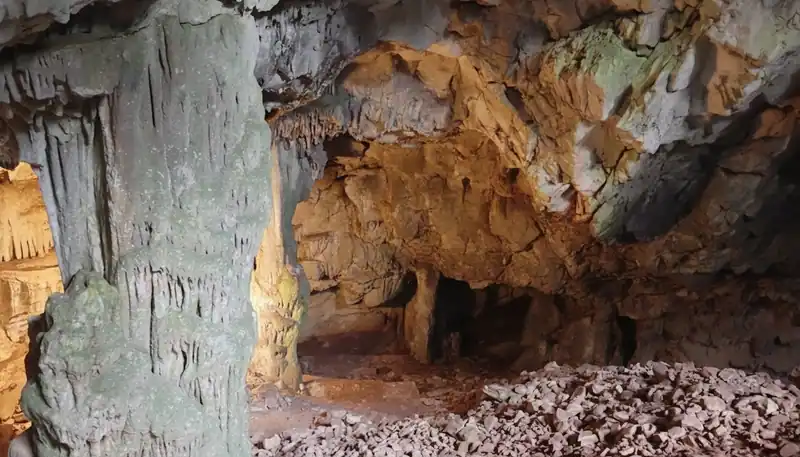
Tucked beneath the sun-bleached streets of Ceglie Messapica, a natural cave holds one of Puglia's most evocative sacred spaces. The Grotta e cripta rupestre di San Michele is a Byzantine-era sanctuary where rock becomes altar, and shadow becomes reverence. Here, centuries-old frescoes cling to stone walls, and every carved niche tells a story of devotion hewn by hand.
Where Stone Becomes Prayer
The moment you step inside, the temperature drops and the light softens. This isn't a built church—it's a living rock transformed into a sacred chamber, dedicated to Saint Michael the Archangel. Byzantine artisans carved altars, niches, and religious symbols directly into the cave walls, creating a space that feels both ancient and intimate.
Traces of frescoes still cling to the stone, their pigments faded but unmistakable. You'll see fragments of haloed figures, geometric patterns, and devotional inscriptions that have survived the erosion of time.
Reading the Walls
The crypt's charm lies in its details. As your eyes adjust to the dim light, you begin to notice the carved crosses, altar recesses, and shallow basins that once held holy water or oil lamps. The rock itself becomes a canvas, a three-dimensional manuscript of faith.
Look closely and you'll spot the layering of different eras—early medieval carvings overlaid with later Byzantine additions. This wasn't a one-time creation; it was a living, evolving place of worship.
- Hand-carved altar niches hollowed into the cave walls
- Faded Byzantine frescoes depicting saints and angels
- Stone crosses and devotional symbols etched into the rock
- Cool, hushed atmosphere that invites quiet reflection
- Natural cave formations blending with sacred architecture
Exploring Ceglie's Hidden Heritage
The cave sits in a town better known for its culinary traditions—Ceglie Messapica is one of Puglia's gastronomic capitals. But beneath the trattorie and butcher shops lies a network of rupestrian churches and caves that reveal the region's Byzantine past. Many visitors pair the crypt with a stroll through Ceglie's historic center, where Baroque palaces and medieval alleyways create a striking contrast to the ancient simplicity of the cave.
If you're exploring the Itria Valley, the crypt makes a compelling detour between the trulli of Alberobello and the whitewashed streets of Ostuni. It's a reminder that Puglia's sacred landscape isn't just above ground—it's carved into the bones of the earth.
Tips for Your Visit
Bring a small flashlight or use your phone's light to illuminate the frescoes and carvings—the cave is naturally dim, and the details reward close inspection. Wear comfortable shoes; the path into the cave can be uneven. Visit in the late afternoon when the summer heat makes the cool refuge of the cave especially welcome.
After exploring, wander into Ceglie's old quarter for a meal at one of the family-run restaurants. The town's reputation for traditional Puglian cuisine—especially bombette and slow-cooked lamb—makes it the perfect way to end a day of underground exploration.