
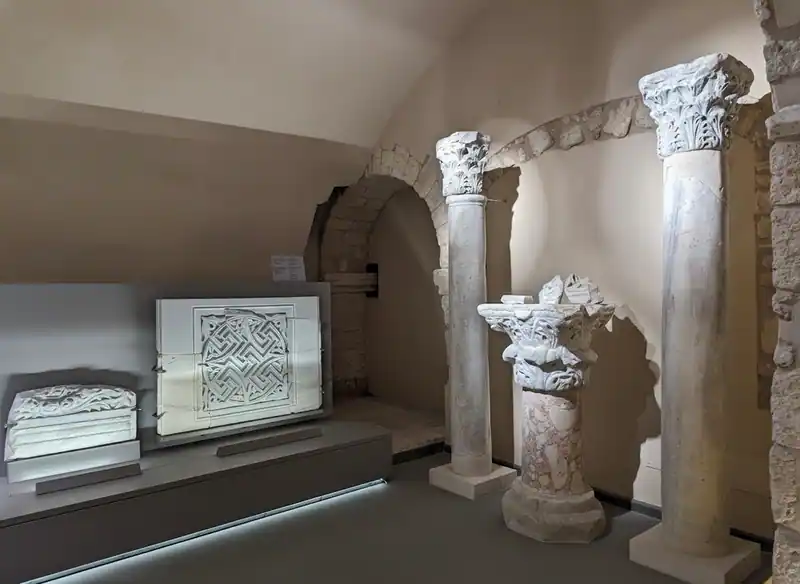
Tucked into the heart of Manfredonia's historic center, the Museo Diocesano offers a quiet journey through centuries of sacred art and devotion. The museum's collection reveals the rich spiritual tapestry of this Adriatic coastal town, where Byzantine influences meet Western Christian traditions in unexpected ways.
Centuries of Devotion in Canvas and Stone
The museum's galleries unfold chronologically, guiding visitors from medieval devotional panels to baroque splendor. Each room tells a story of faith, patronage, and artistic evolution unique to this corner of Puglia.
The paintings range from tavole with gold-leaf backgrounds to dramatic Counter-Reformation canvases. Sculptures in wood and stone capture moments of suffering and grace with remarkable intimacy.
- Medieval polychrome wooden statues with original pigments still vibrant
- Renaissance altarpieces commissioned by Manfredonia's noble families
- Baroque vestments embroidered with silver and gold thread
- Illuminated choir books with hand-painted initials and margins
- Processional crosses and reliquaries in wrought silver
Liturgical Treasures and Sacred Objects
The liturgical collection is where the museum truly shines. Chalices, monstrances, and processional standards reflect not just artistic skill but the living traditions of worship along the Gargano coast.
Many pieces were used in the cathedral next door for centuries. Standing before a 17th-century silver monstrance or a jeweled reliquary, you sense the weight of countless feast days and solemn rituals.
A Window into Manfredonia's Spiritual Identity
What sets this museum apart is its deep connection to local history. The artifacts don't just represent religious art in the abstract—they tell the story of Manfredonia itself, founded by King Manfred in the 13th century after the ancient city of Siponto was abandoned.
Look for pieces salvaged from the ruins of Siponto and early Christian basilicas nearby. These fragments bridge the gap between the ancient world and medieval rebirth, showing how this coastal community preserved its spiritual identity through upheaval and renewal.
Planning Your Visit Wisely
The museum is compact, making it perfect for a focused hour-long visit. The labeling is primarily in Italian, so brushing up on basic art historical terms beforehand enriches the experience.
Combine your museum visit with a walk through Manfredonia's old town and the adjacent cathedral. The archaeological zone of ancient Siponto, just three kilometers south, offers fascinating context—especially the ethereal wire-mesh installation by Edoardo Tresoldi that recreates the vanished basilica.
Early morning visits offer the best natural light in the upper galleries. The museum sees fewer crowds than Puglia's coastal attractions, allowing for quiet contemplation of the artworks.