
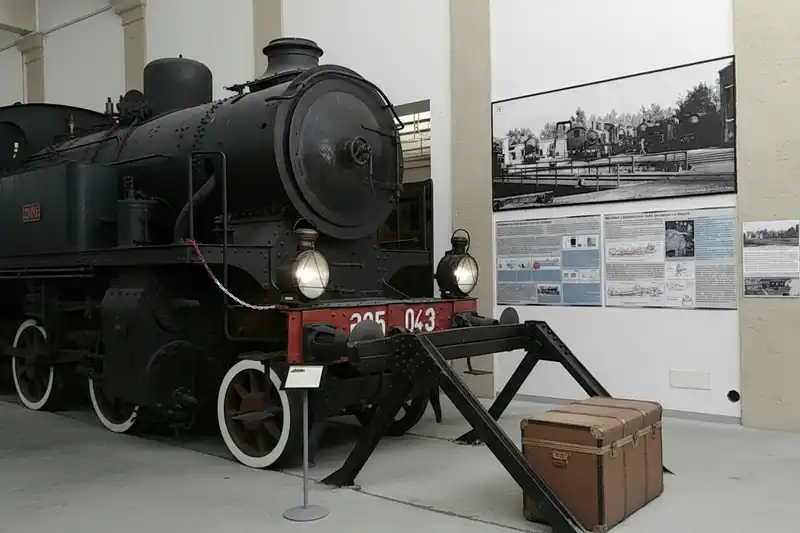
Tucked into a quiet corner of Lecce, the Museo Ferroviario della Puglia invites visitors into the golden age of rail travel across southern Italy. This isn't a museum of labels and glass cases—it's a living archive where the scent of old metal and polished wood mingles with the stories of passengers, engineers, and the landscapes they crossed. The collection spans decades of regional transport history, offering a rare glimpse into how Puglia's towns and coasts were stitched together by iron rails.
Where Steam Meets Stone
The museum's home feels deliberate: Lecce, the baroque jewel of Puglia, where centuries-old architecture meets the industrial romance of the railways. Walking among the restored locomotives, you sense the contrast—ornate limestone façades outside, riveted steel and brass fittings within. The vehicles themselves are beautifully preserved, each one a capsule of its era, from early steam engines to mid-century diesel workhorses.
Climb aboard a vintage carriage and the wooden benches, luggage racks, and faded route maps transport you to a time when train journeys were slow, social, and scenic. You can almost hear the chatter of travelers heading to the Ionian coast or the Adriatic ports.
Stories on the Rails
What makes this museum special is its commitment to context. The exhibits don't just show what the trains looked like—they explain why they mattered. Puglia's rail network connected isolated farming communities, seaside villages, and trade hubs, shaping the region's economy and culture. Photographs, uniforms, and ticket stubs fill in the human side of the story.
- Restored steam locomotives that once hauled passengers across the peninsula
- Original carriages with period interiors you can step inside
- Railway artifacts including signal lamps, station clocks, and conductor tools
- Archival photographs showing stations, workers, and daily life along the lines
- Interactive displays tracing the evolution of Puglia's transport infrastructure
Beyond the Platform
The museum is a natural complement to exploring Lecce's historic center, just a short walk from the baroque churches and piazzas that define the city. After wandering the tracks, head to the nearby centro storico for an aperitivo in Piazza Sant'Oronzo or a stroll down Via Trinchese's boutiques. The museum also makes a thoughtful stop for families—children are drawn to the scale and tactile presence of the trains, while adults appreciate the craftsmanship and historical depth.
If you're tracing Puglia's coastal routes by car, the museum offers a cultural counterpoint to beach days. It's a reminder that the region's beauty isn't just in its shores, but in the networks—human, mechanical, historical—that connected them. Arrive early in the day to have the exhibits largely to yourself, and bring a camera; the interplay of light through carriage windows creates haunting, nostalgic frames.