
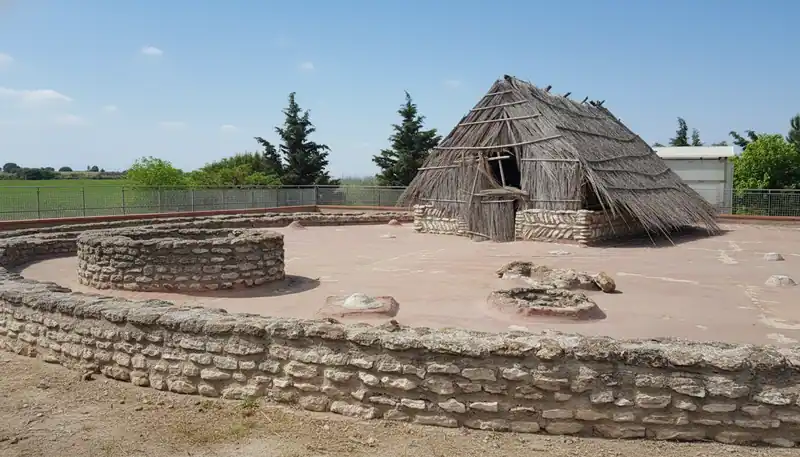
Standing on the vast Tavoliere plain just outside Foggia, Passo di Corvo transports you back seven millennia to one of Europe's largest and most enigmatic Neolithic villages. The site sprawls across the landscape, revealing a complex settlement of circular ditches and dwelling foundations that once housed a thriving prehistoric community.
A Village Frozen in Time
The scale of Passo di Corvo is staggering. Archaeological surveys have identified over a hundred circular enclosures, each representing individual family compounds protected by deep defensive ditches. Walking among these ancient boundaries, you can almost sense the rhythms of daily life farming, crafting pottery, raising livestock that defined existence here between 5700 and 4500 BCE.
The excavated foundations reveal a sophisticated understanding of space and community planning. Stone tools, ceramic fragments, and animal bones scattered across the site tell stories of agriculture, trade, and ritual practices that shaped early human civilization in the Mediterranean.
What Makes This Site Extraordinary
Unlike many archaeological sites where you must imagine the past, Passo di Corvo offers tangible, ground-level evidence of prehistoric engineering. The concentric ditch systems some up to three meters deep demonstrate remarkable labor organization and defensive strategy.
- Massive scale: One of the largest known Neolithic settlements in Europe, covering dozens of hectares
- Visible structures: Clear outlines of circular compounds and ditch systems still identifiable in the landscape
- Archaeological richness: Pottery shards, flint tools, and other artifacts continue to emerge from ongoing excavations
- Unique preservation: Aerial photography reveals patterns invisible at ground level, showing the full complexity of the settlement
Experiencing Prehistoric Puglia
The best time to visit is during the cooler months when the Tavoliere plain's Mediterranean climate is most forgiving. The open landscape offers little shade, so bring water and sun protection. Early morning light casts long shadows that make the ancient ditches more visible and dramatic for photography.
Combine your visit with Foggia's Archaeological Museum, where many artifacts from Passo di Corvo are displayed with detailed context about Neolithic life. The museum helps you appreciate what you've seen in the field, bridging the gap between raw archaeological evidence and lived human experience.
A Landscape That Speaks
What makes Passo di Corvo truly special is how it connects you to the deep human story of this region. The Tavoliere was among Italy's first agricultural heartlands, and standing here, you're literally walking where some of Europe's earliest farmers built their homes and communities.
The silence of the plain amplifies this connection. With only the wind and distant birdsong, you can imagine the smoke rising from cooking fires, children playing between the ditches, and the careful work of hands shaping clay vessels that would endure for thousands of years.