
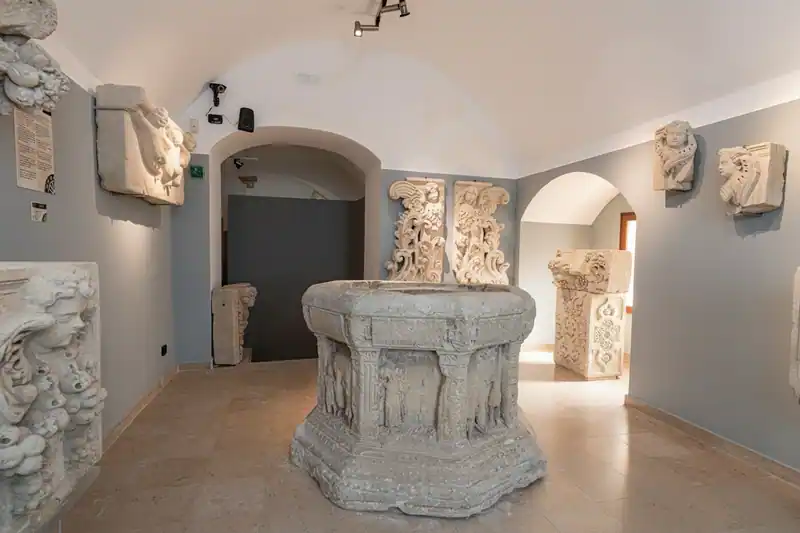
In the shadow of Otranto's luminous cathedral, Palazzo Lopez opens its doors to reveal centuries of devotion, artistry, and spiritual memory. This diocesan museum occupies a graceful historic palace just steps from the Basilica, gathering religious artworks, liturgical vessels, and archaeological fragments that whisper the story of Christianity's deep roots along the Adriatic coast. It's a quiet sanctuary where sacred and civic history intertwine, inviting visitors to slow down and trace the threads of faith that have shaped this ancient port town.
Treasures of Faith and Artistry
The museum's collections span centuries, from Byzantine mosaics and medieval manuscripts to Renaissance paintings and baroque silverwork. Each room feels like a chapter in Otranto's spiritual biography, showcasing the care and craftsmanship that local communities poured into their places of worship. You'll encounter processional crosses that once led festivals through cobbled lanes, illuminated prayer books whose pages glow with gold leaf, and vestments embroidered with silk threads that catch the light like captured sunbeams.
Among the highlights are liturgical objects that speak to Otranto's role as a crossroads between East and West—chalices with Greek inscriptions, icons painted in the Byzantine manner, and reliquaries that carried the remains of martyrs. These pieces aren't just museum artifacts; they're memory vessels, tangible links to the martyrs of 1480 and the generations who rebuilt and rededicated this sacred corner of Puglia.
Walking Through Sacred Memory
The palace itself is part of the experience. High ceilings, stone archways, and carefully restored frescoes create an atmosphere of contemplation that complements the objects on display. Natural light filters through tall windows, casting gentle patterns across the exhibition halls and illuminating the fine details of carved wooden statues and gilded altarpieces.
- Byzantine icons and religious paintings that reveal Otranto's Eastern Orthodox influences
- Illuminated manuscripts with intricate calligraphy and miniature paintings
- Processional crosses and reliquaries carried through the streets during centuries of festivals
- Archaeological fragments from early Christian basilicas and ancient burial sites
- Vestments and textiles embroidered with gold thread and symbolic motifs
Connecting the Dots: Otranto's Living Heritage
After exploring the museum, step outside into Piazza Basilica and let the context sink in. The cathedral is just across the square, home to the stunning floor mosaic and the Chapel of the Martyrs—a visit to Palazzo Lopez enriches that experience tenfold, providing backstory and depth to what you see in the living church. The museum is especially meaningful for those drawn to the layers of history, the aesthetics of sacred art, or the quieter corners of Otranto beyond the waterfront buzz.
Combine your visit with a walk along the lungomare, where fortifications meet turquoise water, or climb the ramparts of the Aragonese Castle for views over terracotta rooftops and the shimmering Adriatic. In the late afternoon, the narrow streets around the museum glow with warm light, and the town's mix of Byzantine, Norman, and Baroque architecture feels like a living open-air gallery.