
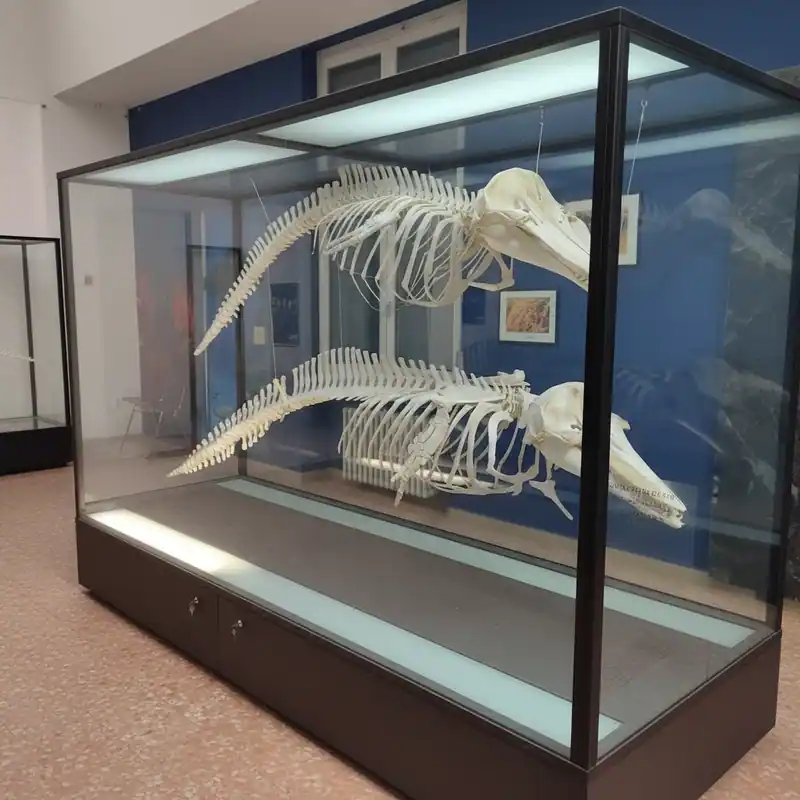
In the heart of Foggia, the Museo di Storia Naturale opens a window into the deep geological and biological past of Puglia. This is not a dusty archive of labeled specimens—it's a curated journey through the landscapes, creatures, and ancient seas that shaped this corner of southern Italy. The museum sits within the Polo Biblio-Museale, a cultural hub that anchors the city's commitment to public knowledge and regional identity.
Fossils and the Ancient Adriatic
The fossil collections are the museum's quiet stars. Millions of years ago, much of Puglia lay beneath warm, shallow seas, and the evidence is here in spiraled ammonites, coral fragments, and the mineralized remains of marine creatures. Each specimen is a chapter in a story that predates human memory, tracing the slow tectonic dance that lifted the seabed into the plains and hills we know today.
Display cases are arranged to guide you chronologically, making complex geological epochs accessible even to younger visitors or those without a scientific background. The labels are clear, the lighting thoughtful, and the sense of wonder—especially when you stand face-to-face with a fossil that swam here eons ago—is genuine.
Regional Flora and Fauna Up Close
Beyond the ancient, the museum turns its lens to the living. Exhibits showcase the biodiversity of modern Puglia: the birds that migrate along the Adriatic flyway, the reptiles that bask in the Tavoliere's summer heat, the wildflowers that paint the spring meadows in violet and gold. Taxidermy and botanical specimens are presented with an emphasis on ecological relationships—predator and prey, pollinator and bloom.
For families, this section is a revelation. Children who've seen buzzards circling the countryside or lizards darting across stone walls can now meet them eye-to-eye, learning their Latin names and understanding their role in the regional ecosystem.
Why It Matters Now
The museum quietly champions environmental awareness. In a region where agriculture and development press against natural habitats, these collections become a reminder of what has been, what remains, and what could be lost. It's a teaching space, a research resource, and a place for reflection—all offered freely to the public.
Plan to spend an hour, maybe ninety minutes if you're truly curious. The museum pairs beautifully with a walk through Foggia's historic center or a visit to the nearby Villa Comunale, where the city's green heart offers a living counterpoint to the preserved specimens inside.
What to Look For
- Ammonite spirals that once drifted in Cretaceous currents
- The reconstructed skeleton displays illustrating vertebrate evolution
- Seasonal wildflower specimens pressed and labeled with Puglian place names
- Interactive panels explaining karst geology and coastal erosion
- The bird migration maps showing Foggia's position on the Adriatic route