
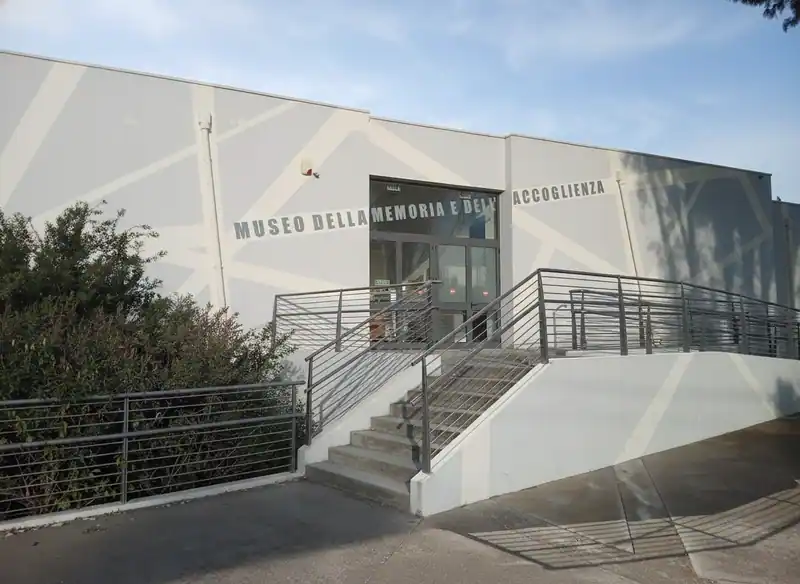
On a quiet stretch of the Ionian coast in Santa Maria al Bagno, a small museum holds one of the most powerful and often overlooked chapters of 20th-century European history. The Museum of Memory and Welcome transforms a coastal hamlet into a place of profound reflection, where the stories of displaced people, refugees, and cultural crossroads come alive through photographs, archival documents, and the voices of those who lived them.
Echoes from the refugee camps
During and after the Second World War, Santa Maria al Bagno became an unlikely sanctuary. Thousands of Jewish refugees fleeing Nazi persecution passed through the campi profughi established in the area's seaside villas. The museum preserves the memory of these transit camps with rare photographs, personal letters, and identity documents that reveal the daily lives, fears, and hopes of those waiting for passage to Palestine or other destinations.
Walking through the exhibition rooms, you encounter faces and names that might otherwise have been forgotten. The walls are lined with testimonies written in multiple languages, scratched into villa plaster or carefully penned in diaries, offering an intimate window into resilience and humanity in the face of displacement.
Stories that span generations
The museum doesn't limit itself to one historical period. Its narrative arc extends from the wartime refugee experience to more recent waves of migration across the Mediterranean. Through carefully curated exhibitions, visitors trace the evolving meanings of accoglienza—welcome—and see how this coastal strip has repeatedly become a landing point and threshold for people seeking safety.
- Original camp photographs showing daily life, makeshift schools, and cultural activities
- Multilingual graffiti and murals preserved from the villa walls where refugees were housed
- Audio testimonies from survivors and their descendants, recorded decades later
- Maps and migration routes that contextualize Santa Maria al Bagno within broader European and Mediterranean displacement patterns
- Contemporary parallels drawing connections to ongoing migration narratives
A visit that lingers
This is not a museum you rush through. The intimacy of the space and the weight of the stories invite quiet contemplation. Many visitors find themselves spending far longer than planned, absorbed in individual testimonies or studying the faces in wartime photographs. The museum is small enough to feel personal, yet comprehensive enough to provide genuine historical depth.
After your visit, take a walk along the lungomare where refugees once waited and looked out over the same sea. The nearby Torre Sabea and the picturesque coves of Nardò's coastline offer a chance to reflect while exploring the natural beauty that has long defined this stretch of Puglia's Ionian shore.