
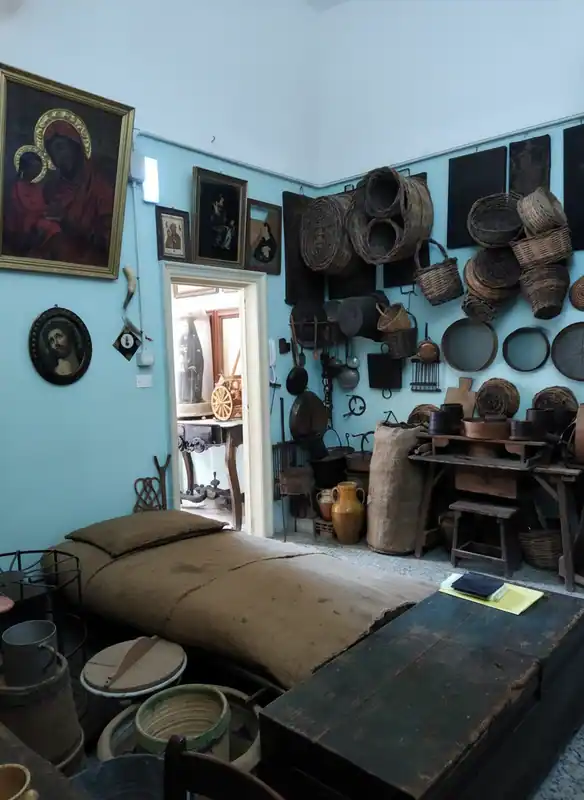
Tucked into the heart of Cerignola, the Museo Etnografico Cerignolano opens a window into the everyday lives of generations past. This is not a museum of grand paintings or marble statues, but of the wooden plows, ceramic jugs, and weaving looms that shaped the rhythm of rural Puglian life. Every artifact tells a story of hands that worked the land, kitchens that fed families, and crafts that sustained communities.
Walking Through the Rooms of Memory
The museum's galleries are arranged like chapters in a visual novel. You'll move from agricultural displays showing ox-driven plows and grain-threshing tools to intimate domestic scenes recreated with period furniture, cooking hearths, and hand-embroidered linens. The curators have preserved not just objects but entire environments, allowing you to imagine the sound of a loom clicking or the smell of bread baking in a forno a legna.
Each room feels like stepping into a neighbor's home from a century ago. The attention to context makes the difference—these aren't random collections behind glass, but coherent snapshots of how people actually lived.
- Original attrezzi agricoli (agricultural implements) from the 19th and early 20th centuries
- Reconstructed workshops showing blacksmith, cobbler, and weaver trades
- Traditional ceramiche and copper cookware from local households
- Handwoven textiles and embroidery samples displaying regional patterns
- Photographs and documents illustrating community festivals and harvest rituals
The Craft Traditions That Defined a Community
Cerignola's identity has long been tied to the fertile plains of northern Puglia, and the museum celebrates the ingenuity required to thrive here. You'll see how local artisans adapted tools for the region's wheat production and olive cultivation. The blacksmith section is particularly striking, displaying horseshoes, sickles, and iron gates forged with techniques passed down through apprenticeships.
The textile displays reveal another layer of cultural expression. Intricate lacework and embroidered household linens weren't just functional—they were status symbols and family heirlooms, stitched during long winter evenings.
Why This Museum Matters Now
In an era when traditional knowledge risks disappearing, the Museo Etnografico Cerignolano serves as both archive and inspiration. It's a place where older visitors often pause, recognizing objects their grandparents used, while younger ones discover a tactile connection to history that no textbook can provide. The museum also hosts occasional workshops on traditional crafts, keeping skills like basket weaving and natural dyeing alive.
Plan at least an hour to wander at a slower pace—this is a museum that rewards close looking. The labels are detailed, and if you visit on a quieter weekday, you might find staff members happy to share extra stories about particular pieces. Combine your visit with a stroll through Cerignola's central piazzas, where some of the architectural details echo the eras preserved inside the museum walls.