
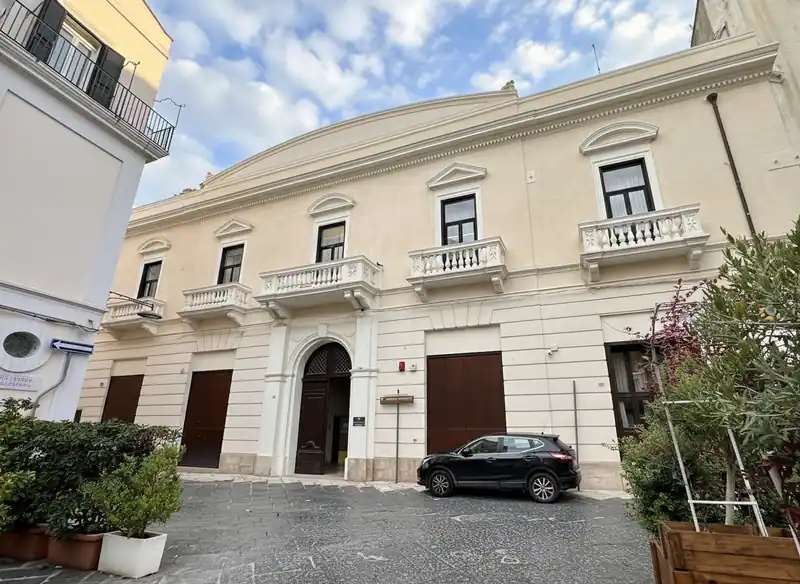
Tucked into the quiet lanes of Brindisi's old town, the Museo Diocesano Giovanni Tarantini opens a window onto centuries of devotion, artistry, and the spiritual life that has shaped this Adriatic port city. The museum's collection of sacred paintings, sculptures, and liturgical objects tells the story of a community where faith and culture have always been intertwined.
A treasury of sacred heritage
Step inside and you'll find yourself surrounded by works that span the medieval period through the Baroque, each piece a testament to the skill of local and itinerant artists. The polychrome wooden sculptures are particularly striking, their vivid colors and expressive faces still radiating the devotion that inspired them. Many of the paintings come from churches across the diocese, gathered here to preserve and share them with a wider audience.
The liturgical objects—chalices, monstrances, vestments embroidered in gold—offer a glimpse into the rituals that once filled Brindisi's cathedral and parish churches. These aren't museum pieces frozen in time; they're tangible links to generations of worshippers.
The man behind the museum
The museum honors Giovanni Tarantini, a beloved priest and scholar who dedicated his life to preserving the region's religious art. His passion for cataloging and protecting these treasures transformed a scattered collection into a coherent narrative of faith in Puglia. Walking through the galleries, you can sense his reverence for both the sacred and the artistic.
The building itself, with its vaulted ceilings and cool stone walls, provides the perfect setting for contemplation. Natural light filters through arched windows, illuminating the canvases and gilded frames in a way that feels almost liturgical.
Visiting tips and what to combine
The museum is compact enough to explore in an hour, making it an ideal addition to a morning spent wandering Brindisi's historic center. Arrive early when the galleries are quiet and you can take your time with each piece. The staff are knowledgeable and often happy to share stories about particular works or the artists who created them.
- Look for the 15th-century altarpiece in the main hall—its detail and preservation are remarkable
- Don't miss the collection of ex-voto paintings, folk art offerings that reveal personal stories of devotion and gratitude
- The medieval illuminated manuscripts are displayed in rotating exhibits to protect them from light damage
- Combine your visit with a walk to the nearby cathedral and the Tempietto di San Giovanni al Sepolcro
- The museum is a short stroll from the harborfront, perfect for an aperitivo afterward
Beyond the galleries
After exploring the museum, take time to wander the surrounding streets of Brindisi's centro storico. The neighborhood retains its medieval layout, with narrow lanes opening onto sun-drenched piazzas. The nearby Roman columns that once marked the end of the Appian Way are just a few minutes' walk, and the seafront promenade offers views across the natural harbor that made this city a crossroads of the Mediterranean for millennia.