
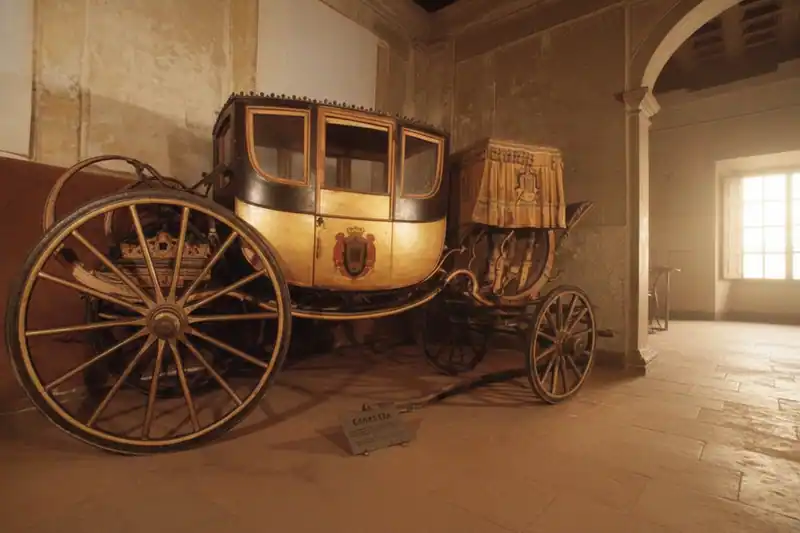
Tucked into the heart of Trani, a jewel of the Adriatic coast, the Museo delle Carrozze invites visitors into a world where every wheel and leather strap tells a story. This isn't just a display of old vehicles — it's a glimpse into the rhythm of life before engines, when journeys were measured in the creak of wooden axles and the clip of hooves on cobblestone.
Wheels of Wonder and Artisan Mastery
Each carriage in the collection is a masterpiece of hand-carved wood, wrought iron, and tooled leather, testament to the skill of artisans who treated transportation as an art form. From ornate ceremonial coaches to sturdy everyday carts, the vehicles reveal how design evolved to meet the needs of nobility, merchants, and farmers alike. The berlina carriages, with their plush interiors and gilded details, contrast beautifully with simpler barroccio carts that carried goods across Puglia's sun-drenched plains.
The museum's curators have arranged the collection to trace not just technological evolution, but the social fabric of past centuries — who traveled, how they dressed, what goods moved between Trani's port and its inland olive groves.
Stories Woven into Every Seam
What makes this museum sing is the attention to detail. Look closely and you'll spot the intricate stitching on velvet cushions, the brass fittings polished to a glow, and the painted family crests that once announced a traveler's status. Some carriages still bear the scuffs and patina of real use, while others gleam as if waiting for a grand ball.
Interpretive panels share anecdotes — the carriage that carried a local bishop on feast-day processions, the lightweight calesse favored by doctors making house calls, the sturdy postal coach that linked Trani to Bari and beyond.
A Perfect Pause in a Day of Discovery
The museum occupies a quiet corner near Trani's historic center, making it an ideal stop between the cathedral's rose window and the harbor's fishing boats. Plan to spend 30 to 45 minutes wandering among the carriages, then step back into the present to explore the city's Romanesque treasures and waterfront pasticcerie.
Here are a few insider tips to enrich your visit:
- Visit in the late morning when natural light filters through the exhibition space, highlighting the carriages' details
- Pair your museum visit with a stroll through Trani's medieval quarter, just a few minutes' walk away
- Photography enthusiasts will love the interplay of shadow and polished wood — bring a camera
- After exploring, head to the harbor for fresh seafood and views of the castle jutting into the Adriatic
- Combine with a visit to the cathedral, one of Puglia's most beautiful examples of Apulian Romanesque architecture
Why Carriages Still Captivate
In an age of high-speed trains and budget airlines, there's something deeply human about standing before a vehicle designed for slowness and care. The museum quietly asks visitors to imagine a world where journeys were rituals, where the quality of a journey mattered as much as its destination. Families with children find the carriages enchanting — they're tangible, tactile, and spark questions about how grandparents' grandparents lived.
Trani's coastal charm and the museum's quiet elegance make it a rewarding stop for anyone curious about the artisan traditions that still pulse through Puglia today.