
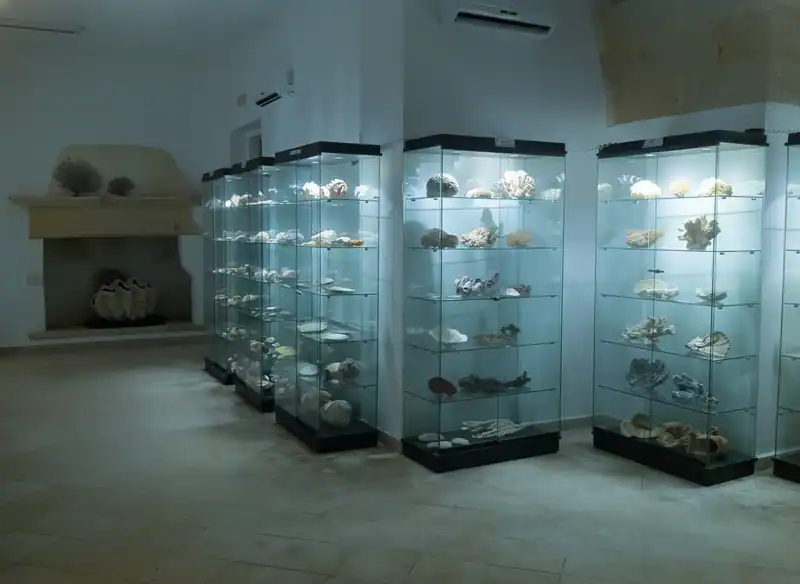
Tucked away in the heart of Palmariggi, a small town in the Lecce province, the Museo della Conchiglia e del Corallo reveals the hidden treasures of the sea. This intimate museum transforms humble shells and coral into a celebration of maritime biodiversity, offering a quiet escape into the world beneath the waves.
A Cabinet of Marine Curiosities
The collection spans specimens from the Mediterranean and distant tropical seas, each display case telling a story of form, color, and evolutionary wonder. The exhibits are thoughtfully arranged to guide visitors from familiar local species to rare and exotic pieces. You'll find yourself face-to-face with spiraled conches, delicate fan corals, and mother-of-pearl fragments that shimmer under museum lighting.
The curation reflects decades of careful collecting, presenting not just objects but a narrative of oceanic life. Each piece is labeled with scientific precision, making the museum as educational as it is beautiful.
What Makes This Visit Special
Unlike large natural history museums, this venue offers an intimate, unhurried experience where you can linger over details. The quiet halls invite contemplation, and the modest scale means you can absorb the entire collection without feeling overwhelmed. It's a space where children ask questions and adults rediscover the wonder of natural forms.
- Intricate spiral patterns that reveal the mathematics of growth
- Vibrant coral branches in hues of pink, white, and deep red
- Rare specimens collected from distant waters, showcasing global marine diversity
- Educational displays explaining shell formation and coral ecosystems
- Photography-friendly exhibits with excellent natural light
Palmariggi and the Surrounding Countryside
The museum sits in Palmariggi, a tranquil agricultural town where stone houses cluster around quiet piazzas. After your visit, stroll through the historic center to admire traditional Puglian architecture and local craft shops. The town's peaceful atmosphere makes it an ideal stop for those exploring the inland routes between the Adriatic coast and the baroque cities.
Combine your museum visit with a trip to nearby Otranto, just 15 kilometers away, where you can walk along the waterfront and visit the stunning cathedral mosaic. The drive through olive groves and low stone walls is quintessentially Puglian, offering a scenic counterpoint to the coastal towns.
When to Visit and What to Know
The museum welcomes families, nature enthusiasts, and anyone seeking a break from beach days with something quietly fascinating. The exhibits are accessible to all ages, and the focus on natural beauty appeals to both casual visitors and serious collectors. Visit during the cooler months if you're exploring inland Puglia, when the countryside is green and the towns are less crowded.
Allow about an hour to explore the collection at a relaxed pace, and consider asking the staff about the origins of particularly unusual specimens—they often have stories to share.