
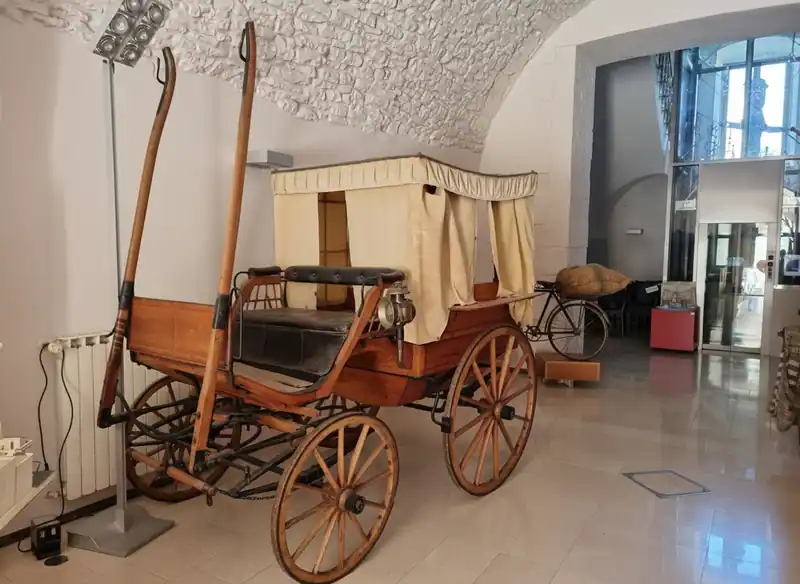
Tucked into the historic heart of Sammichele di Bari, the Museo della Civiltà Contadina "Dino Bianco" offers a rare window into the daily rhythms of peasant life that shaped this corner of Puglia for generations. The collection speaks in the language of worn wood, hand-forged iron, and terracotta smoothed by countless hands—artifacts that bridge the gap between modern visitors and the resourceful families who worked these lands.
Where Objects Become Stories
Every display case holds a narrative. Agricultural tools with handles polished by decades of labor stand beside intricate household items that reveal the ingenuity of rural life. These aren't sterile museum pieces—they're witnesses to harvest seasons, wedding feasts, and the quiet expertise passed from parent to child.
The museum's strength lies in its specificity. You'll see falci (scythes) designed for the particular grains grown in the Murge plateau, oil presses that speak to Puglia's ancient relationship with the olive, and looms that once produced the linens every household needed.
- Authentic masseria household recreations showing kitchen, bedroom, and workshop spaces
- Hand-carved wooden farming implements with visible wear patterns from generations of use
- Traditional winemaking and olive oil production equipment unique to the region
- Artisan tools for trades like cooperage, blacksmithing, and rope-making
- Ceremonial and religious objects that marked the rural calendar
The Texture of Everyday Resilience
What makes this museum compelling is its focus on the ordinary—the everyday objects that required extraordinary skill. A hand-woven basket becomes a lesson in sustainable design. A clay water vessel demonstrates pre-refrigeration cooling technology that kept families hydrated through scorching summers.
The displays honor Dino Bianco, the collector whose passion preserved these fragments of disappearing lifeways. His curatorial choices emphasize function over decoration, showing how beauty emerged from necessity in rural Puglia's material culture.
Beyond the Museum Walls
Sammichele di Bari itself rewards exploration. The town's position between Bari and the Itria Valley made it a crossroads for agricultural commerce, and that heritage shows in its architecture and layout. After the museum, wander the surrounding streets where some traditional workshops still operate.
The nearby Murge hills offer hiking trails through the same landscapes these tools once worked. Spring visits coincide with wildflower season and sheep-shearing demonstrations in surrounding masserie, while autumn brings the olive harvest that has defined the region for millennia.
Consider pairing your visit with the trulli structures of Alberobello, just twenty minutes south, or the cave churches of Matera, an hour northwest. Together, they paint a complete picture of how communities adapted to Puglia's unique geography and climate.