
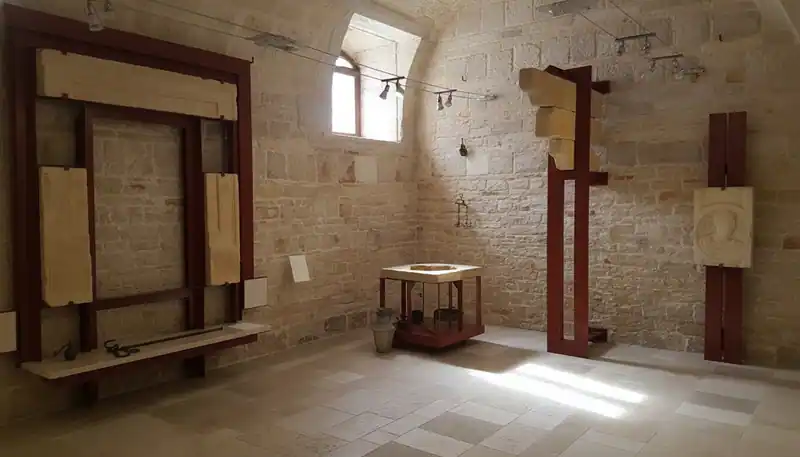
In the heart of Corato, a town nestled in the rolling countryside of northern Puglia, the Museo della Città e del Territorio opens a window onto centuries of local life. This isn't a dusty archive—it's a living conversation between past and present, where every artifact tells a story about the people, traditions, and landscapes that shaped this corner of Italy. Whether you're drawn to ancient pottery fragments or curious about the evolution of rural communities, the museum offers an intimate glimpse into what makes this region tick.
Walking Through Layers of Time
The exhibits unfold chronologically, guiding you from prehistoric settlements through medieval transformations to the agricultural heartland that defines modern Corato. You'll encounter tools from olive presses centuries old, ceramics that reveal trade routes across the Mediterranean, and photographs that capture vanished streetscapes. Each gallery is carefully curated, balancing scholarly depth with accessibility—perfect for curious travelers who want context without the academic jargon.
The museum's strength lies in its hyper-local focus. Rather than skimming broadly across Puglia, it zooms in on Corato and its immediate territory, showing how geology, agriculture, and migration waves left their mark. You'll leave with a richer understanding of why the landscape looks the way it does and how communities adapted over millennia.
What to Look For Inside
Certain pieces deserve a slower look. The collection of ex-voto paintings—small devotional works commissioned by locals—offers a poignant glimpse into everyday hopes and fears. The agricultural tools section reveals the ingenuity of pre-industrial farming, while the maps trace how Corato's boundaries and connections shifted over time.
- Prehistoric flint tools unearthed from nearby fields, evidence of ancient habitation
- Medieval ceramics with intricate glazes, showing trade links to the Adriatic and beyond
- Vintage photographs of Corato's piazzas and festivals from the early 20th century
- Traditional weaving looms and textiles that illustrate domestic craft traditions
- Devotional art reflecting the deep-rooted Catholic culture of rural Puglia
Making the Most of Your Visit
The museum is small enough to explore thoroughly in an hour, but don't rush—the narrative unfolds best when you read the bilingual panels and linger over details. Early afternoon is often quieter, giving you space to absorb the exhibits without crowds. The staff are knowledgeable locals who can answer questions and recommend other heritage sites around town.
Corato itself rewards a few hours of wandering. The historic center, with its Baroque churches and honey-colored stone buildings, sits just a short walk away. Combine your museum visit with a stop at a local pasticceria for bocconotti or a stroll through the weekly market, where the agricultural traditions you've just learned about are still very much alive. If you're traveling through northern Puglia, Corato makes an excellent pause between the trulli of Alberobello and the coastal towns of the Adriatic, offering a quieter, more grounded perspective on the region's culture.