
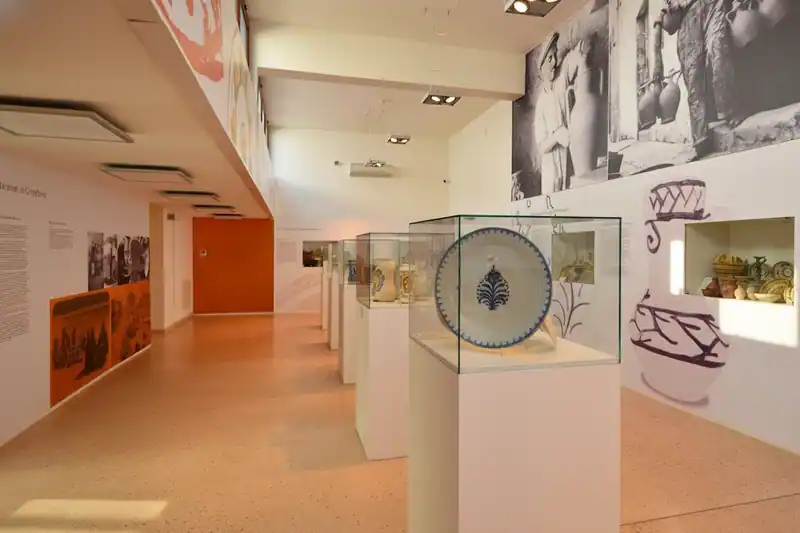
In the heart of Cutrofiano, a town long celebrated as the ceramic capital of southern Puglia, the Museo della Ceramica stands as a tribute to generations of artisans who shaped the region's identity one piece of clay at a time. The museum and its adjoining library occupy a quiet corner of Piazza Municipio, inviting visitors to slow down and trace the evolution of a craft that has defined this community for centuries.
The Collection That Tells a Thousand Stories
Walking through the exhibition halls, you'll find yourself surrounded by traditional pottery pieces that range from everyday household vessels to intricately decorated ceremonial ware. Each artifact reveals something about the lives of the people who made and used them—the ochre-glazed water jugs, the hand-painted tiles, the terracotta bowls worn smooth by decades of use.
The museum's curators have arranged the collection chronologically, allowing you to watch techniques evolve and decorative motifs shift with changing fashions and influences. Look closely at the earliest pieces and you'll spot Arabic geometric patterns, a reminder of the cultural currents that have washed through this corner of the Mediterranean.
A Library Unlike Any Other
What sets this museum apart is the specialized library that documents the history, techniques, and cultural significance of Cutrofiano's ceramic tradition. Rare manuscripts, apprentice notebooks, glaze recipes, and photographs of long-shuttered workshops fill the shelves, offering researchers and curious visitors alike a window into the daily reality of ceramic production.
Even if you don't read Italian, flipping through illustrated technical manuals or gazing at sepia-toned photos of potters at their wheels creates a powerful connection to the past. The library staff are often willing to pull out particularly interesting volumes for visitors who show genuine curiosity.
Making It Part of Your Exploration
Cutrofiano remains a working ceramic center, and visiting the museum is best combined with a stroll through the town's artisan quarter, where several workshops still practice traditional techniques. Time your visit for a weekday morning when you're more likely to catch artisans at work.
- Arrive in the late morning, then explore the town's botteghe (workshops) before lunch
- Combine with a visit to nearby Corigliano d'Otranto, just 10 km away, to experience Griko culture
- Check if any temporary exhibitions are running—the museum regularly hosts contemporary ceramic artists
- Ask about the annual ceramic festival in July, when the town's piazzas fill with demonstrations and markets
- Purchase a piece directly from a local workshop to support living artisans
The museum works best for visitors who appreciate craftsmanship and regional identity rather than grand spectacle. It's intimate, thoughtfully curated, and deeply rooted in the life of Cutrofiano—a place where clay and community remain inseparable.