
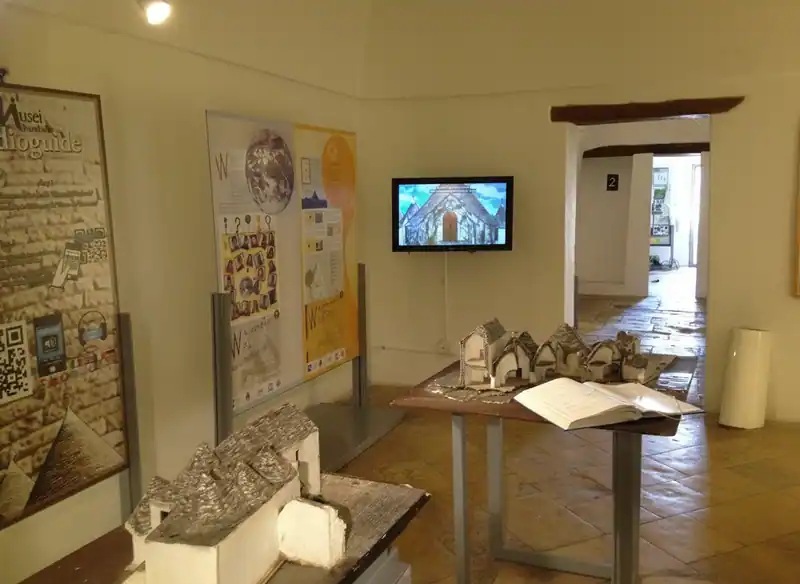
Tucked into the UNESCO-protected heart of Alberobello, the Museo del Territorio Casa Dottor Giacomo Giuseppe Pezzolla offers an intimate window into the daily life that once filled these trulli before tourism transformed the town. Housed in a complex of fifteen interconnected cone-roofed dwellings, the museum recreates lived-in rooms frozen in time, complete with iron bedsteads, hand-carved furniture, and cooking tools that haven't changed in centuries.
Inside the Stone Cones
The museum's layout mirrors how extended families actually inhabited trullo complexes. Each cone serves a different domestic purpose—bedroom, kitchen, storage—connected by low doorways that force you to slow down and enter the rhythm of an earlier era. The whitewashed limestone walls stay cool even in August, and shafts of light slice through small windows to illuminate dusty farming implements and hand-loomed textiles.
Unlike polished museum displays, Casa Pezzolla preserves an informal, almost cluttered authenticity. Copper pots hang from hooks, straw baskets sit stacked in corners, and wooden wine barrels bear the stains of decades of use.
The Objects That Tell the Story
Every artifact here speaks to self-sufficiency and seasonal rhythms. The collection doesn't just show what people used, but how they lived—pressing olives, weaving wool, baking bread in outdoor ovens.
- Traditional looms and spinning wheels that produced all household textiles
- Agricultural tools forged locally, designed for the shallow, rocky soil of the Itria Valley
- Ceramic storage jars for oil, wine, and preserved vegetables
- Period clothing including lace-trimmed aprons and heavy wool work garments
- Kitchen hearths with original iron tripods and wooden utensils blackened by smoke
Making the Most of Your Visit
The museum sits in the Rione Monti district, Alberobello's most photogenic trullo neighborhood. Visit early morning or late afternoon when tour groups thin out, and the angled light makes the whitewashed cones glow like sugar sculptures. Couples and architecture enthusiasts find the museum a peaceful counterpoint to the souvenir-shop frenzy outside—it reminds you that these iconic structures were homes first, monuments second.
Combine your museum visit with a walk through the adjacent alleys where residents still live in trulli year-round. The Trullo Sovrano, a rare two-story example, stands just five minutes away. For a longer afternoon, the Sanctuary of Santi Medici Cosma e Damiano offers panoramic views over the entire trullo district from its hilltop perch.
Beyond the Tourist Trail
Casa Pezzolla rewards visitors who arrive with curiosity rather than a checklist. There are no audio guides or interactive screens—just objects arranged as they would have been used, inviting you to puzzle out their function and imagine the hands that shaped them. Families appreciate the tangible, un-fussy displays that help children visualize pre-electric life, while anyone weary of Alberobello's commercialized main streets will find quiet authenticity within these stone walls.