
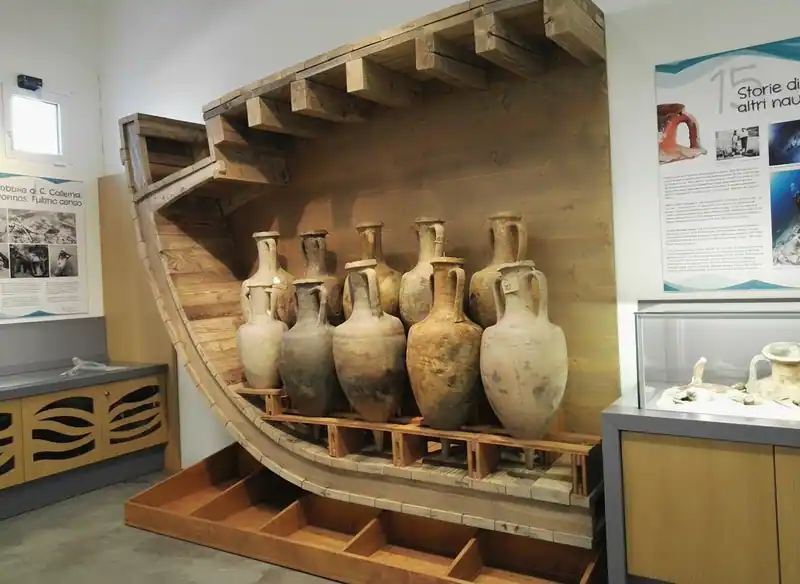
Tucked into the baroque heart of Nardò, the Museo del Mare Antico offers a remarkable voyage through time, from when this corner of Puglia was submerged beneath a prehistoric ocean to the age of Mediterranean trade routes. The museum's collection bridges geology and human history, revealing how the sea has shaped life, commerce, and culture along this coastline for millions of years.
A Window Into Prehistoric Waters
The museum's most striking feature is its extraordinary collection of marine fossils dating back five million years, discovered in the quarries surrounding Nardò. Walking among these ancient specimens—giant clam shells, corals, and the teeth of prehistoric sharks—you'll find it easy to imagine this landlocked town as it once was: the floor of a tropical sea. The fossils are beautifully displayed with contextual panels that bring the Pliocene epoch to life.
Children and adults alike are captivated by the sheer size of some specimens, while geology enthusiasts will appreciate the detailed stratigraphic information. The exhibit makes complex paleontology accessible without oversimplifying, striking a balance that keeps visitors of all ages engaged.
Traders, Sailors, and Coastal Communities
Beyond the prehistoric galleries, the museum traces the human story of navigation and maritime trade in the Mediterranean. Amphoras recovered from ancient shipwrecks, anfore that once carried oil and wine across the sea, sit alongside navigation instruments and charts. These artifacts speak to Nardò's role in the complex web of trade that connected Puglia to Greece, North Africa, and the wider Roman world.
The exhibition thoughtfully illustrates how coastal communities developed their economies around fishing, salt production, and commerce. You'll see fishing nets, boat-building tools, and everyday objects that reveal the rhythms of life for those who made their living from the sea.
Why This Museum Matters
What sets the Museo del Mare Antico apart is its dual focus: it's both a natural history museum and a cultural heritage site. The connection between deep geological time and human history creates a narrative thread that's rare in regional museums. It reminds visitors that the landscape of Puglia—its limestone caves, its white cliffs, its fertile plains—is fundamentally shaped by its ancient relationship with the sea.
Making the Most of Your Visit
The museum is compact enough to explore thoroughly in about an hour, making it an excellent stop before or after wandering Nardò's beautiful historic center. Consider these tips for your visit:
- Start with the fossil galleries to understand the geological foundation, then move chronologically through the human history sections
- Don't miss the small but impressive collection of ancient amber with preserved insects—a highlight often overlooked
- Combine your museum visit with a walk through Nardò's centro storico, where Piazza Salandra's elliptical baroque beauty is just a few minutes away
- After the museum, head to Porto Cesareo (15 minutes by car) to see the living version of the marine ecosystems you've just studied
- Photography is permitted in most areas—the dramatic lighting on the fossil displays makes for striking images
The Broader Context
Nardò itself is often overshadowed by more famous coastal towns, but its inland position offers a different perspective on Puglian life. The town's economy historically balanced agriculture with its proximity to fishing ports, and the museum reflects this duality. After your visit, explore the town's churches, sample pasticciotto at a local bakery, or drive to the nearby protected marine area of Porto Cesareo, where the crystalline waters and underwater meadows of Posidonia continue the story the museum begins.