
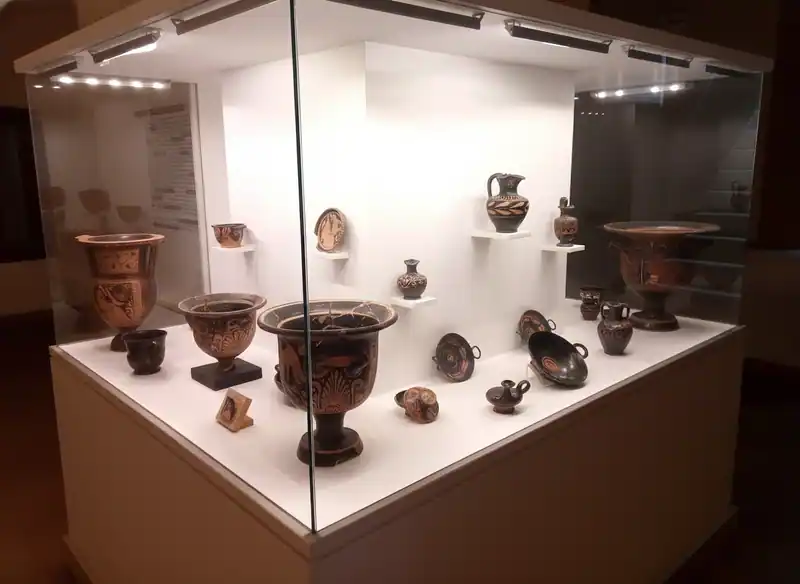
In the heart of Lucera, inside the elegant rooms of Palazzo De Nicastri-Cavalli, the Museo Civico Giuseppe Fiorelli reveals the hidden strata of one of Puglia's most storied fortress towns. This archaeological museum doesn't just display relics it tells the story of a city that has been Roman colony, Byzantine stronghold, and Norman jewel in turn. Every artifact on display was unearthed from the streets and squares you'll walk today, making this a deeply local journey through time.
Walking Through Layers of Urban History
The museum's collection focuses on urban archaeology fragments recovered from building sites, road works, and excavations within Lucera itself. You'll see pottery shards that once held oil pressed from ancient groves, inscriptions that marked public fountains, and coins that passed through the hands of soldiers and merchants. Each piece is a snapshot of daily life across centuries.
What makes this collection special is its geographic intimacy. Unlike regional museums that span entire provinces, Fiorelli's exhibits map directly onto the streets outside. The museum's curators have done careful work connecting finds to specific neighborhoods, so you leave with a mental map of where Roman baths once stood or where medieval markets thrived.
From Roman Colonia to Frederick's City
Lucera was founded as a Roman colonia in the third century BCE, and the museum's earliest artifacts bronze figurines, terra sigillata tableware, architectural fragments speak to a prosperous provincial town. But the most fascinating layer comes later: the Islamic settlement established by Emperor Frederick II in the 13th century, when he relocated thousands of Sicilian Muslims here.
Look for the glazed ceramics and metalwork from this period. They're rare in mainland Italy and reflect the city's unique cultural crossroads. The museum also holds fragments from the cathedral Frederick built and from the massive fortress that still crowns the hill above town.
Highlights Worth Lingering Over
- Roman inscriptions that name local magistrates and dedicate temples to Jupiter and Minerva
- Ceramics from the Swabian period, including rare examples of Islamic-influenced design
- Architectural elements salvaged from demolished buildings, showing how stone was reused across centuries
- Coins and small personal objects rings, pins, gaming pieces that bring ancient residents vividly to life
- Photographs and maps of excavation sites, helping you visualize where each piece was found
Combining Your Visit with Lucera's Fortress
After exploring the museum, walk uphill to the Castello Svevo-Angioino, one of southern Italy's largest medieval fortresses. The ramparts offer sweeping views over the Tavoliere plain, and you'll see the landscape that made Lucera strategically vital for millennia. In late afternoon, the light turns the wheat fields gold and the fortress stones glow warm ochre.
The city's historic center is compact and walkable, with quiet piazzas and family-run trattorias serving caciocavallo podolico and slow-cooked lamb. Lucera feels worlds away from the coastal resorts this is inland Puglia, where history runs deep and tourism hasn't yet crowded out everyday life.