
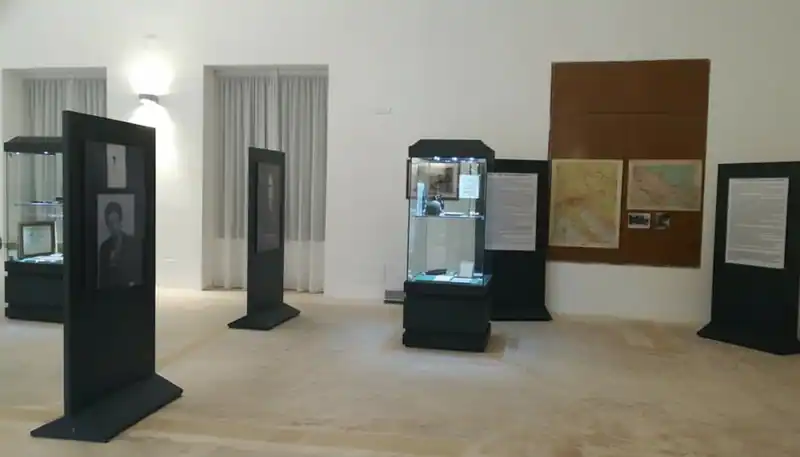
Nestled in the heart of Manduria's historic center, the Museo Civico opens a window onto thousands of years of civilization. The museum's collection spans from the region's pre-Roman inhabitants to the medieval period, offering visitors a rare chance to walk among fragments of empires that once flourished along the Ionian coast. Housed in atmospheric stone rooms, the exhibits transform ancient pottery shards and carved stone into vivid stories of daily life, warfare, and faith.
Voices from the Messapian World
The museum's crown jewels are its Messapian artifacts, remnants of the mysterious civilization that thrived here before Rome's expansion. Intricately decorated ceramics, bronze weaponry, and funerary goods reveal a society that traded across the Mediterranean and fiercely defended its independence. The painted trozzelle distinctive two-handled vases showcase geometric patterns and stylized animals that feel startlingly modern despite their 2,500-year age.
Look closely at the inscriptions in the Messapic language, one of the ancient tongues of Puglia that still puzzles scholars today. These enigmatic texts, carved into stone and pottery, connect Manduria to its identity as ancient Mandurion, a fortified city whose walls still encircle parts of the town.
Layers of Conquest and Culture
Beyond the Messapian galleries, the museum traces Manduria's transformation under Roman rule and beyond. Marble portrait busts, oil lamps, and architectural fragments speak to the wealth that flowed through this agricultural heartland. The medieval section showcases religious art and everyday objects that bridge the ancient and modern worlds.
The coin collection is particularly fascinating, displaying currency from Greek colonies, Roman mints, and Byzantine trade routes. Each tiny disc of metal is a passport to understanding the economic networks that made Manduria a crossroads of the ancient Mediterranean.
Beyond the Museum Walls
The museum sits a short walk from Manduria's other archaeological wonders, making it the perfect starting point for a deeper exploration. Combine your visit with these nearby highlights:
- The Fonte Pliniano, a mysterious underground spring mentioned by Pliny the Elder, lies just steps away
- The Parco Archeologico delle Mura Messapiche preserves over three kilometers of ancient defensive walls
- The Jewish Quarter reveals Manduria's medieval cosmopolitan character
- Sample the town's famous Primitivo di Manduria wine at nearby estates viticulture here dates back to those same ancient peoples whose artifacts fill the museum
Visit in the late afternoon when the summer heat subsides, then wander the old town's limestone streets as the golden hour illuminates centuries-old facades. The museum staff are passionate about local history and often share insights not found on the labels.