
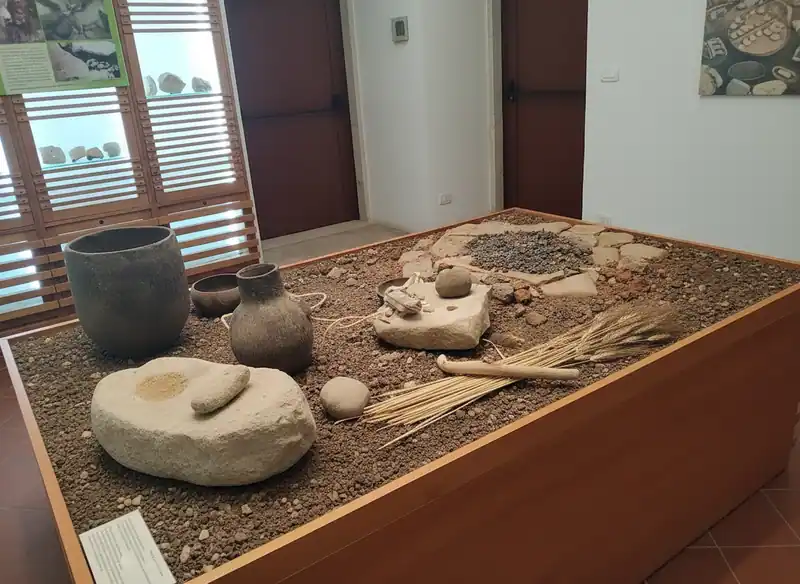
In the heart of Molfetta, where the Adriatic has shaped life for millennia, the Museo Civico Archeologico del Pulo offers a rare window into the layers of civilization that have called this stretch of Puglia home. The museum's collection draws from local excavations, each artifact a fragment of the stories that built this vibrant port town.
Voices from the Depths of Time
The museum takes its name from the Pulo, a striking karst sinkhole just outside town that has yielded some of the region's most significant prehistoric finds. Walking through the galleries, you'll encounter pottery shards, bronze tools, and ceramic fragments that trace human settlement here back thousands of years. Each display case is a conversation between ancient hands and modern eyes.
The layout guides you chronologically, from Neolithic settlements through Greek influence and Roman occupation. The curators have done something special here: rather than overwhelming you with artifacts, they've woven a narrative that connects Molfetta's maritime identity to the objects on view.
What the Stones Remember
Among the highlights are intricate ceramic pieces that reveal trade routes stretching across the Mediterranean, proof that Molfetta was never isolated but rather a crossroads of cultures. The Roman-era finds are particularly evocative amphorae that once held olive oil or wine, now silent witnesses to the commerce that flowed through this harbor.
- Neolithic tools and weapons from the Pulo sinkhole, showing the ingenuity of early settlers
- Greek pottery with geometric patterns that hint at cross-cultural exchanges
- Roman coins and inscriptions documenting the town's role in ancient trade networks
- Medieval religious artifacts connecting the museum's collection to Molfetta's stunning Romanesque cathedral
Beyond the Museum Walls
The real magic happens when you step back outside and see Molfetta with new eyes. The old harbor, with its iconic Duomo Vecchio rising dramatically by the water, suddenly feels like a continuation of the stories you've just absorbed. The limestone beneath your feet is the same rock that sheltered prehistoric communities in the Pulo caves.
Consider visiting in the morning when the museum is quietest, then spend the afternoon wandering the borgo antico, where medieval streets wind between whitewashed buildings. The nearby coastal town of Trani is just fifteen minutes south, offering another stunning cathedral and a chance to extend your historical exploration. If you're drawn to natural sites, the Pulo itself is accessible and makes for a fascinating half-day excursion bring sturdy shoes and a sense of adventure.