
Perched on the northern coast of Puglia, Manfredonia's castle museum offers a rare double experience: a medieval fortress wrapped around layers of far older civilizations. The stone walls that once defended the Adriatic now guard fragments of pottery, carved gods, and everyday tools that trace human life back thousands of years.
Where the fortress meets the ancient world
The Castello itself was commissioned by King Manfred in the 13th century, its massive towers rising where the shoreline meets the foothills of the Gargano. Today those same halls house one of Puglia's most compelling archaeological collections. Walking through the galleries feels like moving backward through time, from medieval stone into the realm of Daunian tribes and Greek settlers who shaped this coast long before any castle stood here.
Natural light filters through arrow slits and modern display windows, illuminating terra-cotta vessels that still bear the fingerprints of their makers. Each room unfolds a different chapter: Bronze Age settlements, Hellenistic trade routes, Roman everyday life captured in oil lamps and children's toys.
Treasures that tell a thousand stories
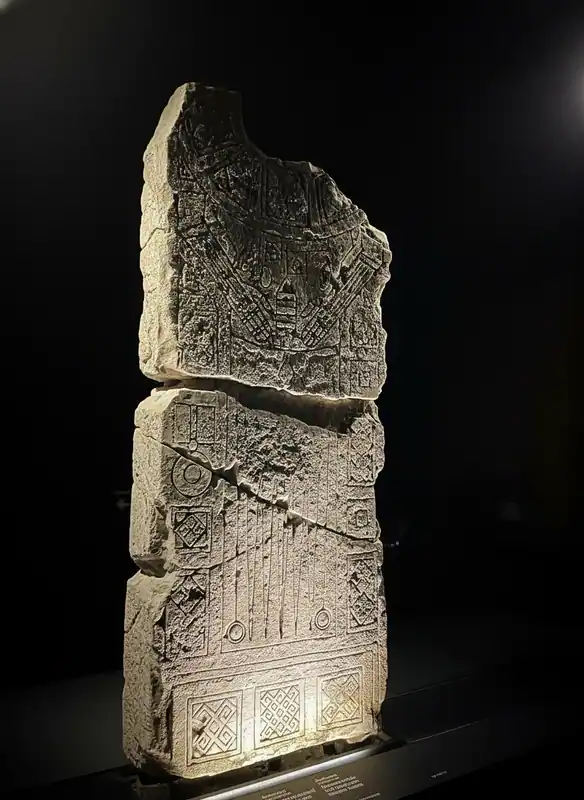
The museum's crown jewels are the Daunian stelae intricately carved stone markers from the indigenous people who inhabited this region before Rome's rise. Their geometric patterns and stylized human forms speak a visual language nearly lost to time. Nearby, Greek amphorae reveal the trade networks that once linked Manfredonia's ancient harbor to the wider Mediterranean world.
But it's the humble objects that often captivate most: bronze fibulae still sharp enough to clasp a cloak, ceramic spindle whorls smooth from thousands of hours spinning wool, a child's clay rattle that once soothed a baby to sleep centuries before the castle's first stone was laid.
What to look for
- The Daunian funerary stelae with their haunting geometric faces and ritual symbols
- Greek red-figure pottery showing daily life and mythology in delicate brushwork
- Bronze armor and weapons from warriors who defended these coasts millennia ago
- The castle's own architectural layers, visible where medieval meets ancient foundation
- Temporary exhibitions that often spotlight recent excavations from the Gargano peninsula
Beyond the castle walls
After exploring the galleries, step onto the castle ramparts for sweeping views over the Gulf of Manfredonia and the white buildings of the modern town below. The harbor that once welcomed Greek triremes now shelters fishing boats, and the broad lungomare invites a post-museum stroll. Time your visit to catch the late afternoon light gilding the Gargano cliffs to the north.
The nearby centro storico rewards wanderers with baroque churches and quiet piazzas, while the coast road north leads to the wild beaches and ancient forests of Gargano National Park a landscape that has changed far less than the civilizations that rose and fell along its shores.