
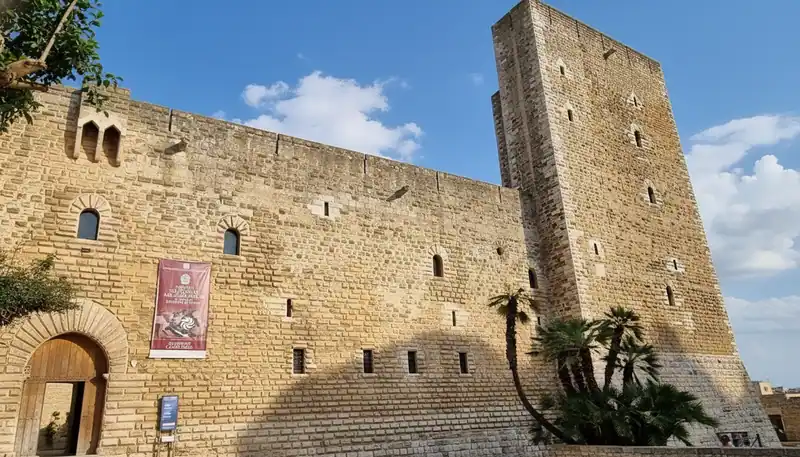
Perched in the historic center of Gioia del Colle, the National Archaeological Museum occupies rooms within the town's striking Norman castle, creating an atmospheric backdrop for one of Puglia's most compelling archaeological collections. The museum's treasures span millennia, tracing human presence in this inland corner of the region from the Neolithic through the classical age. Walking through these vaulted halls feels like stepping into a conversation with civilizations that shaped the landscape long before the modern towns took root.
A Castle Setting for Ancient Stories
The museum's location inside the Castello Normanno-Svevo adds drama to every display case. Stone walls that once protected medieval lords now frame pottery shards and bronze tools, creating a layered sense of history. The fortress itself dates to the 12th century, and its architecture massive, austere, commanding provides a stark contrast to the delicate painted ceramics and intricate metalwork on display.
As you move through the exhibition rooms, natural light filters through narrow windows, illuminating fragments of ancient Peucetian pottery and Greco-Roman amphorae. The juxtaposition of medieval fortress and Bronze Age artifact makes the experience uniquely immersive.
What the Artifacts Reveal
The collection is organized chronologically, guiding you from prehistoric flint tools through to the sophisticated red-figure pottery of Magna Graecia. Each period offers its own revelations about daily life, trade, and belief systems in ancient Puglia.
- Neolithic tools and obsidian blades that speak to early settlement and resource networks
- Peucetian ceramics decorated with geometric patterns, evidence of an indigenous culture before Greek colonization
- Greek pottery imported from across the Ionian Sea, testament to thriving trade routes
- Funerary objects including jewelry and votive figurines that illuminate burial customs
- Roman-era sculptural fragments showing the continuity of settlement into the imperial period
Beyond the Museum Walls
Gioia del Colle itself rewards exploration. The town's centro storico spreads out from the castle in a web of narrow streets lined with pale stone houses. The local mozzarella di Gioia del Colle is protected by DOP status and worth seeking out in nearby caseifici.
The museum makes an excellent pairing with a day trip through the Murgia plateau, where the landscape of rolling hills and ancient oak forests has changed remarkably little since antiquity. The town sits roughly midway between the Ionian and Adriatic coasts, making it a natural inland stop for visitors exploring the contrasts of Puglia's interior and shoreline.
When to Visit
Weekday mornings tend to be quietest, allowing for unhurried contemplation of the displays. The museum draws archaeology enthusiasts, but its accessible presentation appeals just as much to curious travelers with no specialized background. Summer visits can be combined with the cooler elevation and shaded streets of the old town, a welcome respite from coastal heat.