
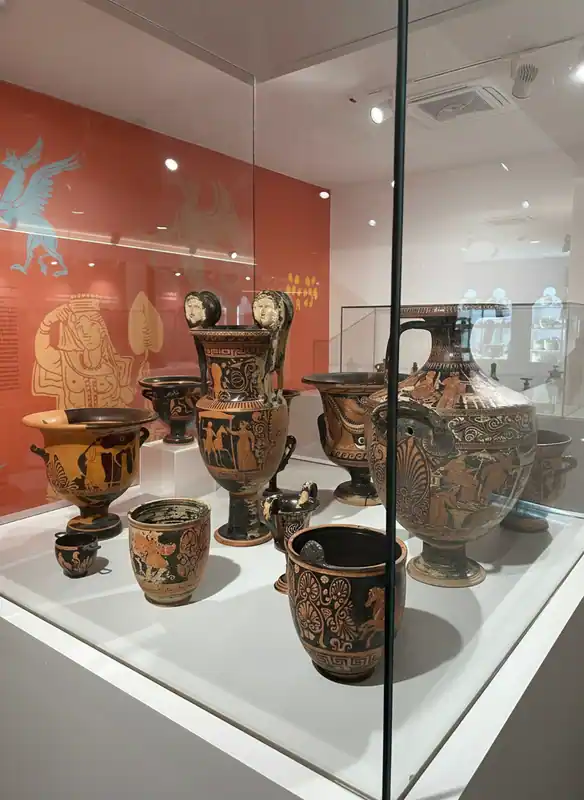
Tucked into the heart of Mattinata, a coastal town where the Gargano massif meets the Adriatic, the Museo Archeologico Nazionale Matteo Sansone offers a portal into the region's layered past. This compact museum preserves the material memory of early settlements and seafaring cultures that once thrived along these limestone cliffs. It's a place where ceramic shards and weathered tools speak volumes about the daily rhythms of ancient communities.
A Chronicle Written in Clay and Stone
The museum's collection revolves around pottery, tools, and everyday objects unearthed from burial sites and habitation zones scattered across the Gargano peninsula. Each display case arranges fragments chronologically, revealing how trade routes, agricultural practices, and craftsmanship evolved over centuries. Visitors trace the arc from prehistoric flint blades to painted Greek amphorae, each artifact a tangible link to the hands that shaped it.
The curators have prioritized context over spectacle. Labels explain not just what you're seeing but why it mattered how a particular vessel design indicates contact with distant Illyrian traders, or how burial goods reflect beliefs about the afterlife.
Maritime Echoes from the Adriatic Shore
Because Mattinata sits at a natural harbor point, many artifacts illuminate the maritime cultures that used these waters as highways. Anchors, fishing weights, and navigational tools show how communities harvested the sea and connected with networks stretching to Greece and beyond. The Adriatic wasn't a barrier it was a conduit, and this museum captures that dynamic beautifully.
- Painted ceramics that echo motifs from across the ancient Mediterranean
- Bronze Age tools revealing early metalworking sophistication
- Burial ornaments offering glimpses into ritual and status
- Amphorae fragments stamped with trader marks
Weaving the Museum into Your Gargano Exploration
The museum sits within easy walking distance of Mattinata's historic center, making it a natural rainy-day complement to beach days at nearby Baia delle Zagare or hikes through the Foresta Umbra. The best time to visit is mid-morning, when natural light floods the exhibition rooms and you're likely to have the space largely to yourself.
Combine your museum stop with a stroll down to the seafront lungomare, where local fishermen still use techniques their ancestors might recognize. The town's weekly market, held Thursday mornings, brings the surrounding countryside's produce into the piazza a living continuation of the trade and agriculture the museum documents. If you're driving the coastal route between Vieste and Manfredonia, this makes an enriching one-hour detour that adds depth to the dramatic landscapes outside.