
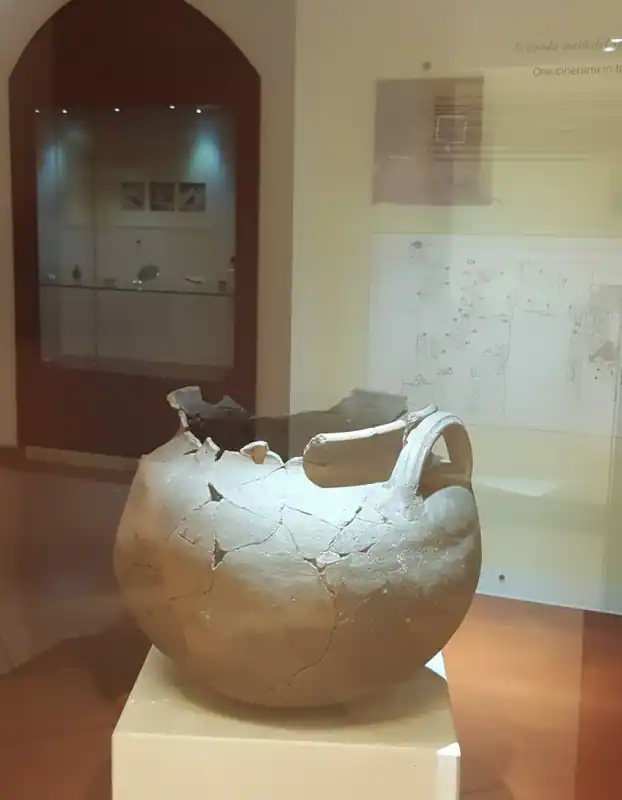
In the heart of Villa Castelli, a small town in the Brindisi countryside, the Museo Archeologico di Pezza Petrosa opens a window into millennia of human settlement. This intimate museum houses treasures unearthed from local excavations, each piece whispering stories of the communities that once thrived in this corner of Puglia. It's a quiet space where ancient pottery and everyday artifacts bridge the gulf between modern life and the region's layered past.
Fragments of a Forgotten World
The collection focuses on finds from the immediate area, making every display case feel deeply rooted in the landscape outside. Ceramic vessels, tools, and fragments of domestic life chart the rhythms of ancient settlements. Many pieces date back to the Messapian and Roman periods, offering a tangible connection to the peoples who farmed, traded, and built communities on this same red earth.
The displays are modest but carefully curated, allowing visitors to linger over individual objects rather than rush through crowded galleries. Each artifact carries the weight of its own small mystery a potter's fingerprint pressed into clay, a repair that hints at an object's long use.
Reading the Landscape Through Shards
What makes this museum particularly compelling is its emphasis on local context. The excavations at Pezza Petrosa revealed layers of occupation, and the museum's interpretation helps visitors understand how the surrounding countryside was shaped by human hands over centuries. You'll see pottery styles shift, settlement patterns evolve, and trade routes emerge through the subtle evidence of imported wares.
- Messapian pottery with geometric motifs that echo Greek influence
- Roman-era oil lamps and amphorae that speak to agricultural abundance
- Tools and domestic objects that reveal daily rhythms of ancient life
- Explanatory panels that connect artifacts to the wider Apulian archaeological narrative
A Quiet Counterpoint to Coastal Crowds
Villa Castelli sits inland, away from the beach throngs, and the museum shares that same unhurried character. It's an ideal stop for travelers curious about the entroterra the interior where the pace slows and stone towns cluster around ancient piazzas. After exploring the museum, wander the narrow streets of the old quarter, where Baroque churches and family-run bakeries anchor a rhythm of life largely unchanged by tourism.
The museum pairs beautifully with visits to nearby Ostuni, the dazzling white city visible on the horizon, or the Valle d'Itria, where trulli and masserie dot rolling hills. Consider arriving in the morning, when light filters gently through the museum's windows, and plan to linger in Villa Castelli's central square for an espresso and a sense of local life that feels refreshingly unperformed.