
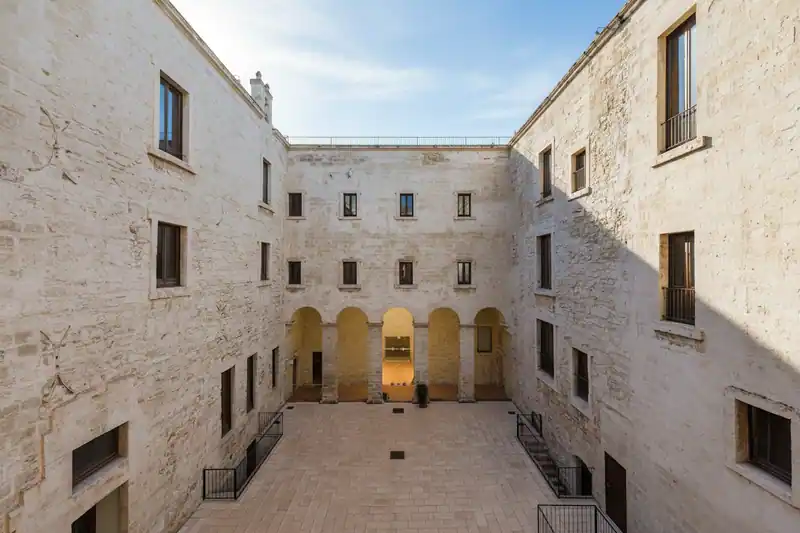
In the labyrinthine lanes of Taranto's old town, the MuDi Diocesan Museum opens a window into centuries of devotion and artistry. Housed in a historic building steps from the cathedral, this intimate collection invites visitors to trace the evolution of sacred art across the region's long spiritual history. The space itself whispers stories of faith, its vaulted rooms and quiet corridors providing a contemplative counterpoint to the vibrant streets outside.
Where Art Meets Devotion
The museum's galleries unfold like chapters in a devotional manuscript. Each room reveals a different facet of religious expression, from jewel-toned Renaissance paintings to intricately carved wooden altarpieces. The collection spans centuries, offering glimpses of how artists and craftsmen across generations interpreted sacred themes through local eyes and hands.
Liturgical vestments embroidered with gold thread hang beside processional crosses, while marble saints gaze serenely from alcoves. The curation allows visitors to appreciate not just individual pieces, but the continuous dialogue between faith and artistry that has shaped this corner of Puglia.
Treasures That Tell Stories
Among the museum's highlights, several pieces command special attention. Look for the collection of illuminated manuscripts, their pages still vibrant with color despite the passing centuries. The silver reliquaries showcase the extraordinary skill of local silversmiths, while the collection of sacred vessels reveals how even functional objects became canvases for beauty.
- Renaissance altarpieces with hauntingly expressive faces and rich color palettes
- Baroque sculptures demonstrating the dramatic flair of the period
- Medieval illuminated manuscripts with intricate marginalia
- Ornate liturgical vestments revealing centuries-old embroidery techniques
- Silver and gold reliquaries crafted by master artisans
Beyond the Museum Walls
After your visit, the old town of Taranto beckons with its tangle of narrow streets and sea-facing vistas. The nearby Cathedral of San Cataldo, with its stunning mosaic floor, complements the museum experience beautifully. Walk toward the Ponte Girevole, the famous swing bridge connecting the old and new cities, where the Mar Piccolo and Mar Grande meet in a dance of currents.
The museum sits in the heart of the Città Vecchia, making it an ideal starting point for exploring Taranto's Byzantine and Norman heritage. Combine your visit with a stroll along the waterfront, where fishermen still haul in the famous Taranto mussels, and cafés serve coffee with views across the ancient harbor. The juxtaposition of sacred art and maritime life captures the essence of this unique Ionian city.