
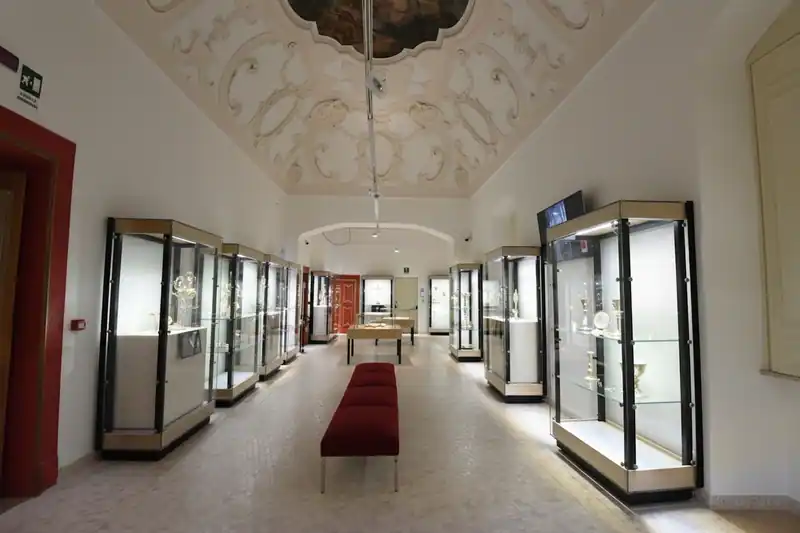
Tucked into the heart of Martina Franca's baroque labyrinth, the Museo MuBa – Basilica San Martino offers a rare encounter where sacred architecture and contemporary artistic vision share the same breath. The museum inhabits the dramatic shell of a historic basilica, its vaulted ceilings and worn stone columns framing artworks that span centuries. This isn't a traditional white-walled gallery; it's a living dialogue between devotion and creation, where every corner whispers stories of pilgrims, artists, and the countless hands that shaped this Valle d'Itria gem.
Where Baroque Meets the Canvas
The basilica itself is a masterwork of Puglian baroque, with carved altars and chapels that once hummed with daily liturgy. Today, those alcoves serve as intimate exhibition spaces, each painting or sculpture illuminated by shafts of light filtering through high windows. The interplay between centuries-old frescoes and modern installations creates a layered visual experience that rewards slow exploration.
Visitors often pause longest in the nave, where the contrast is most striking: classical religious icons alongside bold contemporary pieces. The museum's curators have embraced the tension, allowing each era to speak without overshadowing the other.
The Atmosphere of Quiet Discovery
Unlike bustling metropolitan museums, MuBa invites a meditative pace. The stone floors amplify every footstep, and the cool interior offers respite from Martina Franca's summer heat. You'll likely share the space with only a handful of others—locals who drop by for a moment of reflection, art students sketching in notebooks, the occasional traveler who stumbled in from the centro storico.
- Natural acoustics that make whispered conversations feel sacred
- Filtered daylight that shifts the mood of artworks throughout the day
- Hidden chapels revealing unexpected details in side altars
- Cool stone interiors perfect for August afternoons
Beyond the Basilica Walls
MuBa sits within easy walking distance of Martina Franca's Piazza Roma and the Palazzo Ducale, making it a natural stop during a morning wander through the old town's winding alleys. After your visit, the nearby pasticcerie along Via Cavour offer the perfect excuse to linger over an espresso and a slice of bocconotto, the local pastry filled with almond cream.
The museum also serves as a cultural anchor for the town's summer festival season. If you're visiting in July or August, check for evening concerts or special exhibitions that transform the basilica into a performance space, the acoustics elevating chamber music to near-spiritual heights.
Insider Tips for Your Visit
Arrive in the late morning when the sun angles through the eastern windows, casting dramatic shadows across the nave. Photography is generally welcome, but natural light works best—flash disrupts the atmosphere and rarely does justice to the texture of stone and canvas. Combine your visit with a stroll through the Giardino delle Rimembranze, a quiet public garden five minutes away, where locals gather beneath centuries-old oaks.
The museum's volunteer staff are often artists or historians themselves, and a polite question can unlock stories about specific works or the basilica's layered past. Don't rush; this is a place that rewards those who sit, observe, and let the space unfold at its own rhythm.