
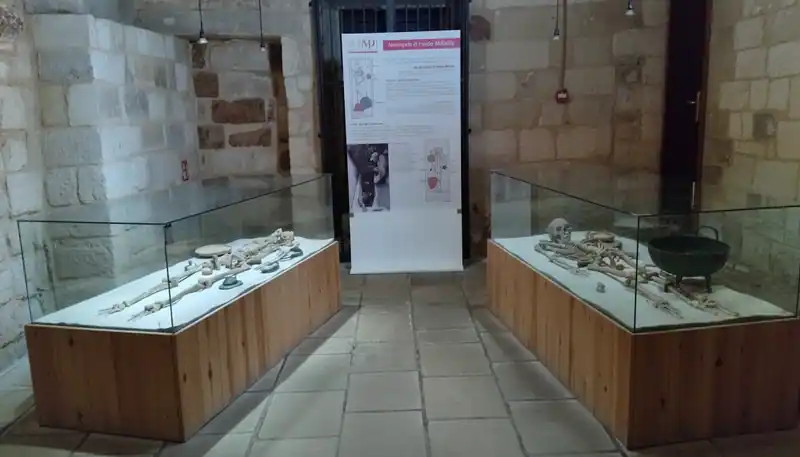
In the quiet town of Poggiardo, just a few kilometers inland from the Adriatic coast, a small museum holds the keys to one of Puglia's most mysterious civilizations. The Museo archeologico della civiltà Messapica di Vaste invites visitors to step back more than two millennia to meet the Messapians, the indigenous people who thrived here long before Roman legions marched south.
Echoes of an Ancient People
The museum's collection centers on artifacts unearthed from nearby Vaste, once a thriving Messapic settlement. Walking through the exhibition halls, you encounter the tangible remnants of daily life: hand-painted pottery with geometric patterns, bronze fibulae that once fastened tunics, and clay vessels still bearing the fingerprints of their makers. Each piece tells a fragment of a larger story about trade routes, artistic traditions, and a society that flourished between Greek and Italic influences.
The Messapians left no written literature, so these objects become their voice. The painted ceramics reveal not just aesthetic preferences but also social structures and religious beliefs embedded in every brushstroke.
What the Artifacts Reveal
The museum doesn't simply display objects behind glass it contextualizes them within the landscape and lifestyle of ancient Vaste. You'll discover how the Messapians worked the land, defended their settlements, and celebrated their dead through elaborate burial practices.
- Intricately decorated trozzella vessels, unique to Messapic culture, with their distinctive high handles
- Bronze weapons and tools that speak to both agricultural life and military readiness
- Funerary objects including jewelry and ceramica geometrica placed in tombs
- Fragments of defensive walls and architectural elements from the ancient acropolis
- Maps and reconstructions that help visualize the vanished cityscape of Vaste
Beyond the Museum Walls
A visit here pairs beautifully with a walk to the nearby archaeological park of Vaste itself, where you can stand among the ruins and imagine the settlement as it once was. The low stone foundations and remnants of fortifications become far more meaningful after seeing the museum's collection. On your way back toward the coast, the coastal tower at Torre San Gregorio offers a different historical layer Renaissance maritime defense against Saracen raids.
Poggiardo's central piazza makes a pleasant stop for an espresso and a pasticciotto before continuing your exploration. The town retains a slower pace that feels fitting after an encounter with a civilization that measured time in harvests and seasons rather than hours.
When to Visit
The museum remains comfortably cool even during peak summer heat, making it an ideal midday refuge when the coast becomes crowded. Spring and autumn bring the added advantage of softer light for photographing both the artifacts and the surrounding countryside, where ancient olive groves still stand as living links to the Messapic agricultural landscape.