
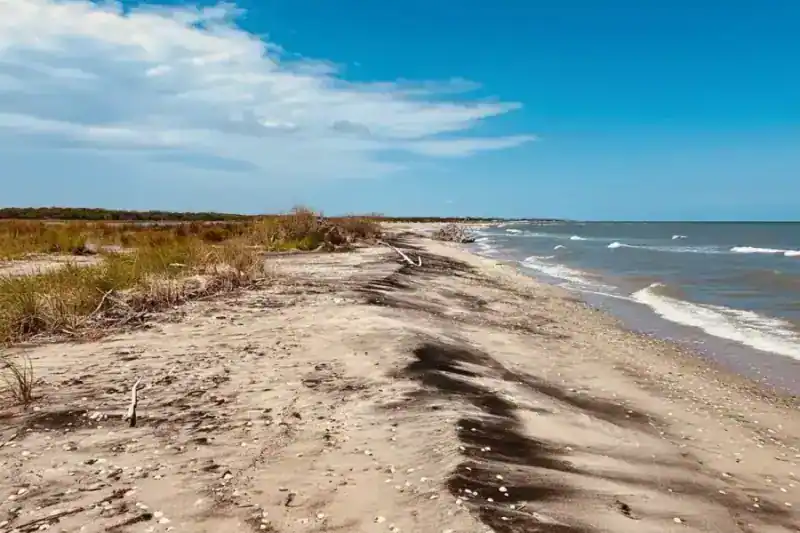
Tucked along the Adriatic coast near Vernole, the Riserva Naturale WWF Le Cesine is a rare pocket of wilderness where the land meets the sea in a mosaic of lagoons, reed beds, and windswept dunes. This protected wetland is one of Puglia's most important bird sanctuaries, a place where herons glide over still water and rare waders pause during their migrations between Africa and northern Europe. The silence here is punctuated only by birdsong and the rustle of macchia mediterranea wild rosemary, myrtle, and juniper growing thick along the trails.
A Wetland Ecosystem Like No Other
Le Cesine is defined by its diversity. The reserve protects a complex system of brackish lagoons, coastal dunes, and freshwater springs, creating habitats that support over 200 bird species throughout the year. In spring and autumn, the wetlands come alive with flamingos, black-winged stilts, and marsh harriers, while the surrounding pine forests shelter smaller songbirds and insects that pollinate the region's wild orchids.
Walking the reserve's unmarked trails, you'll notice how quickly the landscape shifts from dense scrubland to open salt flats, then to the edge of the dunes where the sand meets the sea. The reserve feels both fragile and timeless, a reminder of what much of this coast looked like before development.
What to Bring and When to Visit
Le Cesine rewards patient observation. The best time to visit is early morning, when the light is soft and the birds are most active. Bring binoculars if you have them many species keep their distance, and spotting a purple heron or a Kentish plover requires a little stillness.
Spring (April to May) and autumn (September to October) are peak migration seasons, but even in summer the reserve offers a cooler, shadier retreat from the beach crowds. Wear sturdy shoes; the paths can be uneven and sandy. There's no visitor center, so come prepared with water and sun protection.
Beyond the Reserve: Vernole and the Adriatic
The reserve sits just a few kilometers inland from the seaside hamlets of San Cataldo and Torre Chianca, making it easy to combine a morning birdwatching walk with an afternoon on the Adriatic. Vernole itself is a quiet agricultural town, dotted with trulli-like rural shelters and old tobacco-drying sheds a glimpse into the working countryside of the Lecce province.
For a deeper dive into the region's natural heritage, pair your visit with a trip to the nearby Alimini Lakes, another wetland corridor where freshwater and saltwater ecosystems overlap. Together, these reserves form a vital green corridor along Puglia's eastern coast.
- Over 200 bird species recorded, including flamingos, herons, and rare waders
- Coastal dunes and Mediterranean scrubland rich with wild herbs and orchids
- Unmarked trails that wind through lagoons, pine forests, and salt flats
- Peak seasons in spring and autumn for migratory bird activity
- Close to San Cataldo beach, perfect for combining nature and sea in one day