
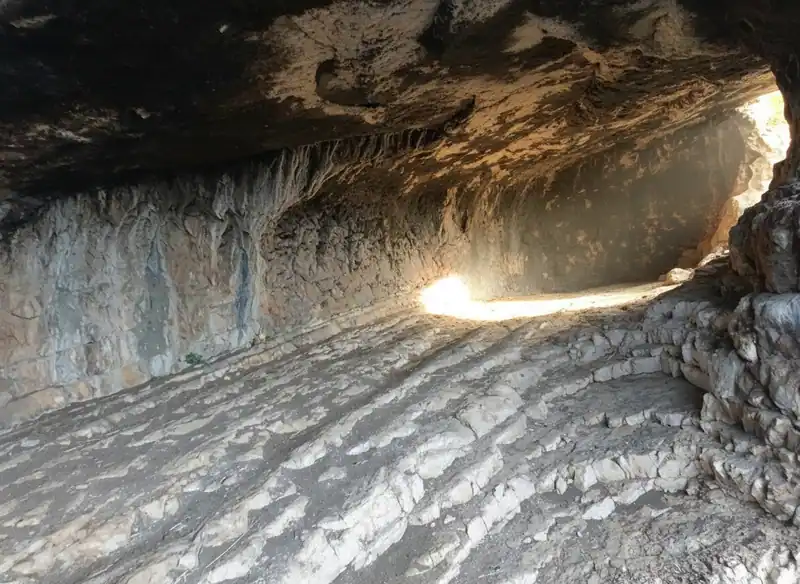
Nestled in the limestone hills of San Marco in Lamis, in the Valle della Monaca valley, La Grotta dei Monaci opens like a window into the past. This natural cave formation has sheltered monks, shepherds, and hermits for centuries, leaving behind traces of devotion and daily life etched into the rock. The surrounding countryside of the Gargano foothills rolls in soft waves, dotted with ancient olive groves and wildflower meadows that shift color with the seasons.
Chambers Carved by Time and Faith
The cave unfolds in a series of interconnected chambers, each shaped by centuries of water and wind. Distinctive stalactite formations hang from the ceiling like frozen waterfalls, while the walls bear faint traces of human presence—carved niches, smoke-blackened alcoves, and shallow depressions that once held oil lamps. Archaeologists believe the site served as a refuge and place of worship from the early medieval period onward.
The grotta takes its name from the monks who sought solitude here, part of a broader tradition of eremitic life that flourished across the Gargano. Walking through the cool, dim spaces, you can almost hear the echo of chanted prayers and the shuffle of sandaled feet on stone.
What Awaits Inside the Stone
Exploring La Grotta dei Monaci is a sensory journey into stillness and shadow. The temperature drops the moment you step inside, a welcome relief on hot summer days. Your eyes adjust slowly, revealing the textures of the rock and the play of natural light filtering through cracks and openings.
- Layered rock strata that tell the geological story of the region, deposited over millions of years
- Hand-carved niches where monks placed icons and candles during their hours of contemplation
- Natural acoustics that amplify even the softest whisper, creating an atmosphere of reverence
- Wildflowers and herbs growing at the cave entrance, including thyme and oregano that perfume the air
- Panoramic views from the approach path, stretching across the valley toward the peaks of the Gargano massif
Making the Most of Your Visit
Plan to arrive in the early morning or late afternoon, when the slanting light creates dramatic contrasts inside the cave and the summer heat is less intense. The path to the entrance is uneven and rocky, so sturdy walking shoes are essential. Bring a flashlight or headlamp to explore the deeper chambers safely, and a light jacket—even in July, the cave stays refreshingly cool.
La Grotta dei Monaci fits beautifully into a day exploring the spiritual and natural heritage of the Gargano. Combine your visit with the monastery of San Matteo, perched on a nearby ridge, or venture to the coastal town of Vieste for a swim in the Adriatic. The cave's remote setting rewards those willing to wander off the beaten path, offering a quiet counterpoint to the busier attractions of the Puglian coast.