
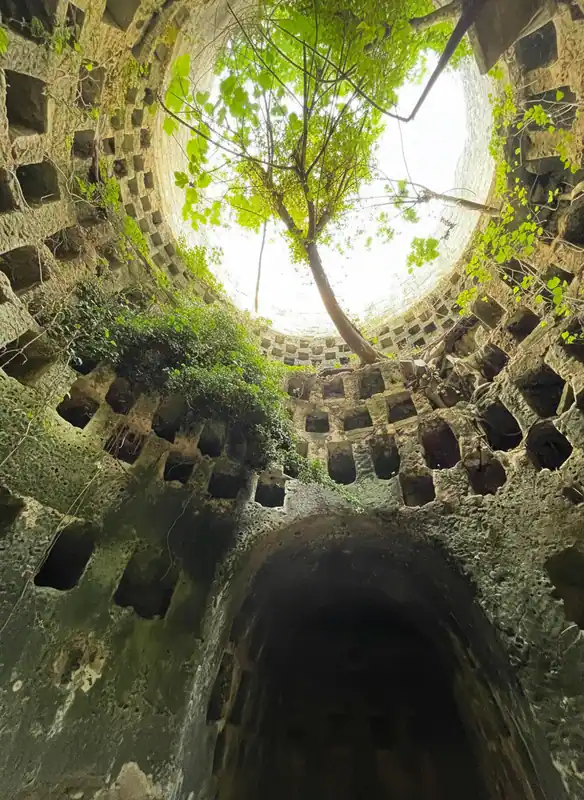
In the heart of Otranto, where medieval streets wind toward the Adriatic, a threshold opens into another time entirely. The Ipogeo di Torre Pinta is not a monument that rises toward the sky but one that beckons downward, into cool limestone chambers carved by hands that worked here thousands of years before the first cathedral stone was laid. This is archaeology as intimacy a chance to stand where the region's earliest inhabitants once stood, in spaces shaped by ritual and memory.
Carved from Living Rock
The limestone beneath Otranto is softer than it appears, and ancient communities knew how to work it with patience and precision. The hypogeum's passages and chambers were hollowed out over generations, their walls bearing the faint traces of tool marks that speak to the labor involved. The stone here holds a particular quality of light diffuse, gentle, almost amber that transforms the underground into something neither fully dark nor entirely illuminated.
These weren't merely utilitarian spaces. The layout suggests purpose beyond storage: niches for the dead, passages aligned with care, thresholds that marked the boundary between the world above and the mysteries below.
Echoes of Prehistoric Ritual
Walking through the Ipogeo di Torre Pinta means entering a dialogue with people whose names are lost but whose presence lingers in every carved surface. This was a burial site, a place where communities laid their dead to rest and perhaps returned to honor them. The chamber reveals settlement patterns that archaeologists are still piecing together evidence of how early inhabitants organized their lives, their beliefs, and their relationship to the land.
- The cool, constant temperature of the underground, a welcome reprieve during Otranto's blazing summer months
- The subtle acoustic qualities of the chambers, where even a whisper seems to carry weight
- The tactile presence of limestone walls shaped by human hands millennia ago
- The quiet sense of scale not vast, but intimate, reminding you that ancient lives were lived at human dimensions
Weaving the Visit into Your Otranto Day
The Ipogeo sits within easy walking distance of Otranto's historic center, where the Byzantine cathedral with its astonishing mosaic floor draws crowds. But the hypogeum offers a counterpoint fewer visitors, deeper time, a chance to move from the medieval into the prehistoric within a single afternoon. Consider visiting in the late morning, when the contrast between the bright Adriatic light and the dim passages feels most pronounced.
Afterward, wander toward the lungomare and let the sea air clear your head. Or climb to the Aragonese Castle, where centuries of defensive architecture tell another chapter of Otranto's layered story. The town's compact scale makes it easy to thread together ancient, medieval, and modern in a single, seamless exploration each site deepening the others.