
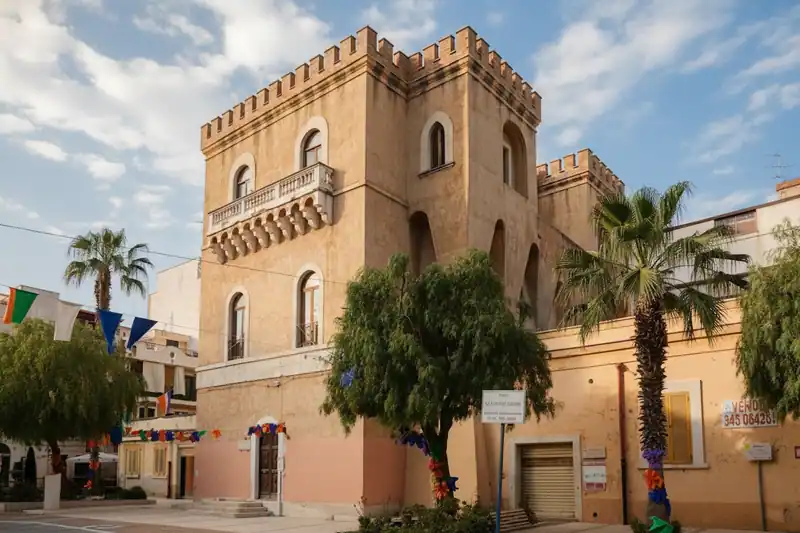
Tucked into the coastal town of Margherita di Savoia in northern Puglia, Il Museo delle Saline reveals a chapter of regional history written in crystals and brine. This museum takes visitors beyond the familiar postcard images of Italy, diving into an industry that quietly sustained communities for centuries. Here, the story of salt the "white gold" that financed kingdoms and flavored empires comes alive through artifacts, photographs, and the voices of those who harvested it.
Where White Gold Meets Cultural Memory
The museum sits in a town defined by its salt flats, the largest in Europe. Walking through its galleries, you encounter the tools and techniques that transformed seawater into crystalline treasure. Wooden rakes, hand-carved transport carts, and faded ledgers speak to an era when salt production was backbreaking labor under the scorching Puglian sun.
Photographs from the early twentieth century show workers knee-deep in shallow pools, their silhouettes mirrored in the water. The exhibition doesn't romanticize the work it honors the endurance of the salinari, the salt workers whose knowledge passed down through generations shaped both the landscape and the local economy.
The Science and Art of Salt Harvesting
Interactive displays explain how salt crystallization occurs, tracing the journey from seawater intake to final harvest. You'll learn about the delicate balance of temperature, wind, and evaporation that determines each season's yield. Models of the salt pans illustrate the intricate network of canals and basins that still function today.
- Original raschiatori (scraping tools) used to gather salt crystals from pan floors
- Historical documents detailing export routes that carried Margherita di Savoia salt across the Mediterranean
- Samples of different salt varieties, from coarse cooking salt to fine table grades
- Video testimonials from former salt workers sharing memories of daily routines and seasonal rhythms
The museum doesn't just archive the past it connects traditional methods to contemporary artisan salt production. You'll see how some techniques remain unchanged, while others have adapted to modern health and culinary trends.
Beyond the Museum Walls
After exploring the indoor exhibits, consider extending your visit to the active salt pans themselves, visible from several vantage points around town. The reflective pools create striking landscapes, especially near sunset when the water turns rose and amber. Birdwatchers flock here for sightings of flamingos and other migratory species drawn to the saline wetlands.
The museum works best as part of a half-day exploration of Margherita di Savoia. Stroll the seafront promenade afterward, or visit the historic thermal baths that also draw on the town's mineral-rich waters. If you're traveling in late summer, you might catch the salt harvest in progress a rare opportunity to see tradition in motion.
Practical Insights for Your Visit
Plan about an hour to ninety minutes for a thorough visit. The museum is compact but information-rich, with multilingual panels that make the technical details accessible. Spring and autumn offer the most comfortable weather for combining the museum with outdoor exploration of the salt pans.
Photography enthusiasts should bring a camera both the museum's artifacts and the surrounding salt landscapes offer compelling subjects. The contrast between the museum's dim, cool interior and the brilliant light of the salt flats outside creates a sensory journey worth savoring slowly.