
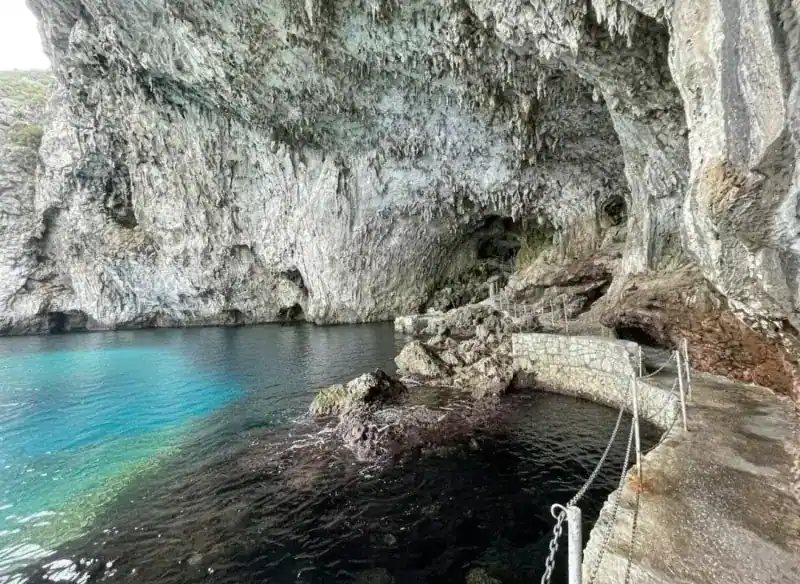
Tucked into the dramatic cliffs of Castro on the Adriatic coast, Grotta Zinzulusa is one of Puglia's most captivating natural monuments. This ancient sea cave invites you into a realm where crystalline formations glitter in the filtered light and the sound of lapping water echoes through vast chambers. It's a journey through geological time, where every stalactite and stalagmite tells a story written over millennia.
A Cathedral Carved by the Sea
The moment you step inside Grotta Zinzulusa, the temperature drops and the world transforms. The main chamber opens like a natural cathedral, with towering columns of limestone reaching from floor to ceiling where stalactites and stalagmites have fused over thousands of years. The cave's name comes from the Salentine dialect word for zinzuli the rags that hang to dry inspired by the way the formations dangle from the ceiling.
The interplay of natural light and shadow creates an almost theatrical effect, highlighting the creamy whites and amber tones of the rock. As you venture deeper, the illumination shifts, revealing hidden alcoves and formations that seem almost otherworldly in their delicate beauty.
Where Geology Meets the Adriatic
Grotta Zinzulusa isn't just a geological wonder it's a living ecosystem. The cave extends for about 160 meters, part of which can be explored on foot, while deeper sections disappear into underground waterways. Scientists have discovered unique species of crustaceans that exist nowhere else on earth, adapted to the cave's eternal darkness.
The view from the cave entrance is equally spectacular, framing the turquoise Adriatic waters and the rugged coastline of Castro. This contrast between the cool, ancient interior and the sun-drenched Mediterranean outside makes the experience unforgettable.
Planning Your Underground Adventure
Visiting during the quieter morning hours allows you to experience the cave's atmosphere without crowds, when the silence and the drip of water create an almost meditative ambiance. The temperature inside remains cool year-round around 16-18°C so bringing a light jacket is wise even in summer.
- Wear sturdy, non-slip footwear as the cave floor can be damp and uneven
- Combine your visit with a stroll through Castro's historic centro storico perched on the cliffs above
- Time your visit to include the nearby Grotta Romanelli, another significant archaeological site just a few kilometers south
- The coastal road between Castro and Santa Cesarea Terme offers stunning viewpoints and small beaches perfect for a post-cave swim
- Photography enthusiasts should bring a camera capable of low-light shooting to capture the formations
The town of Castro itself rewards exploration, with its Byzantine castle ruins, seaside restaurants serving fresh ricci di mare (sea urchins), and winding streets that speak to centuries of maritime history. Grotta Zinzulusa becomes the anchor of a perfect coastal day, blending natural wonder with the authentic rhythms of an Adriatic fishing village.