
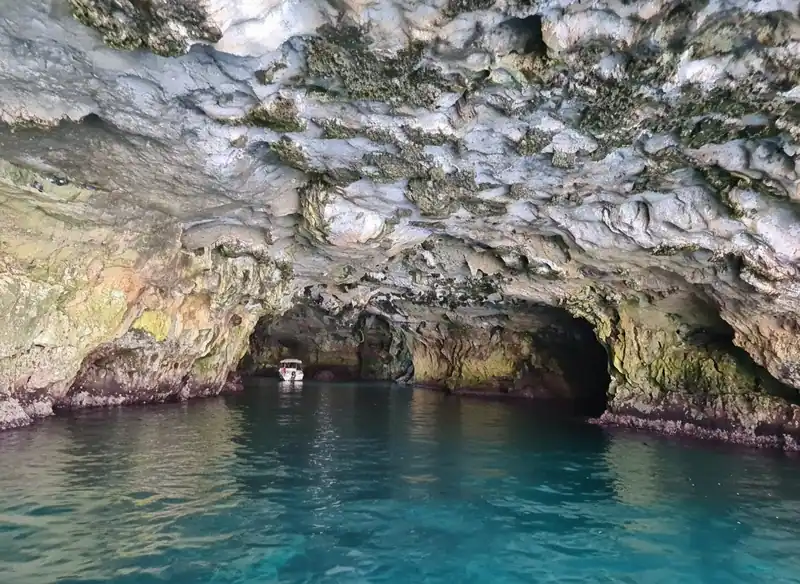
Carved into the limestone cliffs of Polignano a Mare, Grotta Stampagnata stands as one of the Adriatic coast's most breathtaking natural wonders. This marine cavern opens directly onto the sea, where the Adriatic's crystalline waters lap against ancient rock formations sculpted by millennia of waves. Unlike the town's more famous grotte, Stampagnata offers an intimate encounter with Puglia's raw coastal beauty, away from the crowds that gather at Lama Monachile.
Where the Adriatic Meets Ancient Stone
The cave's entrance yawns wide from the rocky shore, framing a view that shifts from deep cobalt to luminous turquoise as sunlight filters through the water. Inside, the walls bear the signature of countless tides smooth in some places, pocketed and textured in others. The natural acoustics amplify every splash and ripple, creating a soundtrack that feels both timeless and immediate.
At low tide, you can wade into the grotto and feel the cool stone underfoot. When the sea is calm, the water inside becomes a mirror, reflecting the cave's contours in perfect symmetry.
A Snorkeler's Secret Playground
Beneath the surface, Grotta Stampagnata reveals its true character. Visibility often exceeds ten meters, and the seabed is a mosaic of sand patches, rocky outcrops, and darting schools of occhiate (saddled sea bream). Snorkeling here feels like swimming through a living aquarium, with the cave walls providing shelter for octopuses, sea urchins, and the occasional curious grouper.
- Crystal-clear visibility that makes every underwater detail sharp and vivid
- Sheltered waters protected from the open sea, ideal for confident swimmers
- Rock formations that create natural swim-throughs and hidden alcoves
- Rich marine life including colorful fish, crustaceans, and sea anemones
- Dramatic light play as the sun moves across the cave's opening throughout the day
Timing Your Visit to the Grotto
Early morning brings the softest light and the calmest seas, when the cave's interior glows with an almost ethereal blue. Midday sun penetrates deepest into the cavern, illuminating details invisible at other hours. Avoid visiting during scirocco winds from the southeast, which can stir up sediment and roughen the waters.
Combine your grotto exploration with a walk along the coastal path toward Cala Paura or Ponte dei Lapilli, where smaller caves and natural arches punctuate the limestone cliffs. The historic center of Polignano is just minutes away on foot perfect for a post-swim aperitivo overlooking the sea.
What to Bring and What to Expect
Pack reef-safe sunscreen, as the cave's ecosystem is fragile. Water shoes with good grip help on the slippery rocks at the entrance. A waterproof camera or housing captures the interplay of light and stone that makes this grotto so photogenic. The cave is accessible to anyone comfortable swimming in open water, though children should be supervised closely due to the depth and the cave's natural features.
Polignano's coastline is a patchwork of these hidden marine treasures, but Grotta Stampagnata stands out for its accessibility and its pristine condition. It's a place that rewards slow exploration and quiet observation a pocket of wild Adriatic beauty just steps from one of Puglia's most beloved towns.