
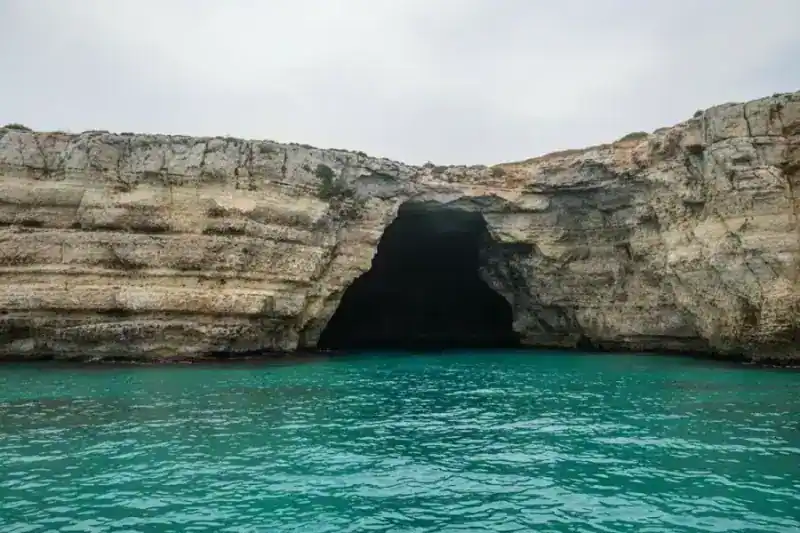
Along the rugged Adriatic coastline near Otranto, Grotta Sfondata stands as one of the most striking natural landmarks you'll encounter. This marine cave owes its name literally "collapsed cave" to the distinctive natural opening in its roof, where the Mediterranean sun pours through, illuminating the crystal-clear seawater that floods the cavern below. The interplay of light, water, and ancient limestone creates a spectacle that shifts with every hour of the day.
Where Rock Meets Sea
The cave's most captivating feature is the way the sea surges through its collapsed ceiling, creating a natural pool of turquoise brilliance. The limestone walls, carved over millennia by wind and waves, form dramatic arches and alcoves that frame the water in ever-changing patterns. During calm mornings, the surface becomes a perfect mirror, reflecting the warm ochre and grey tones of the rock above.
Visitors often find themselves mesmerized by the acoustic effect inside the echo of waves against stone creates a rhythmic soundtrack that amplifies the sense of being inside the earth itself.
Exploring the Cave and Coastline
Reaching Grotta Sfondata is part of the adventure. The cave sits along a stretch of coast accessible by foot via a scenic coastal path, or by sea for those who prefer to approach by kayak or small boat. The surrounding cliffs are dotted with wild Mediterranean scrub lentisco, rosemary, and sea fennel that perfume the air, especially in late spring.
The best time to visit is mid-morning when the sun is high enough to penetrate the opening fully, creating shafts of light that dance on the water. Early summer offers the warmest water temperatures for those brave enough to swim into the cave's mouth.
What to Bring and Combine
- Water shoes the rocky shoreline can be sharp and slippery
- Snorkeling gear to explore the underwater rock formations just outside the cave
- A waterproof camera to capture the interplay of light and water
- Sunscreen and a hat there's little shade along the approach path
- A picnic to enjoy on the cliffs above, with sweeping views of the Adriatic
The Otranto Context
Grotta Sfondata sits within a coastline rich in history and geology. Just a few kilometers north lies the Baia dei Turchi, a crescent of white sand framed by pine forest, while to the south the cliffs rise toward the lighthouse of Punta Palascìa the easternmost point of mainland Italy. The town of Otranto itself, with its Norman cathedral and labyrinthine old town, makes an ideal base for exploring this stretch of coast.
Locals often combine a morning at the cave with a late lunch in Otranto's harbor, where fishermen still unload their catch each afternoon. The juxtaposition of wild, untouched nature and centuries-old human settlement is what defines this corner of Puglia and Grotta Sfondata captures that duality perfectly.