
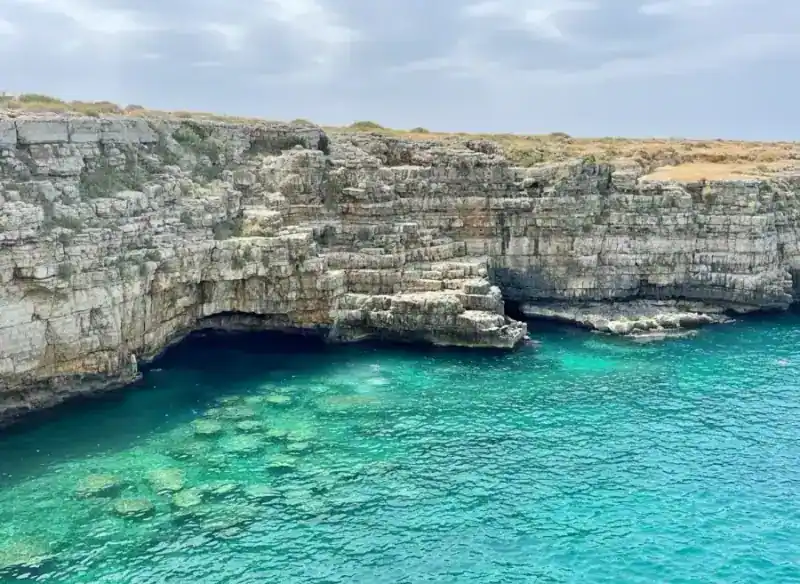
Carved into the dramatic cliffs of Polignano a Mare, Grotta Piana is a sea cave that transforms geology into pure spectacle. Centuries of wave action and saltwater erosion have shaped a hidden world of stalactites and stalagmites, where limestone formations descend from the ceiling and rise from the floor in a frozen ballet. Natural openings in the rock allow shafts of sunlight to penetrate the grotto, casting shifting patterns of light and shadow across the white stone and turquoise water below.
A Cathedral Carved by the Sea
The entrance reveals itself best from the water, where the mouth of the cave frames a view of dramatic limestone architecture. Inside, the scale shifts the cave's vaulted ceiling rises high overhead, sculpted over millennia into rippling, organic forms. The interplay between seawater and rock has left a record of erosion you can read in every curve and hollow.
The most striking feature is how light filters through natural apertures in the cave roof, creating a constantly shifting atmosphere as the sun moves across the sky. Morning visits often bring softer, diffused light, while midday sun can produce brilliant shafts that illuminate the water in electric blues and greens.
Exploring the Grotto's Limestone Gallery
The formations themselves range from slender, needle-like stalactites to broader columns and curtains of stone. Each has been shaped drop by drop, year by year, into shapes that seem almost deliberate flowing folds, branching fingers, smooth domes. The cave floor, when visible at low tide or calm conditions, reveals matching stalagmites reaching upward.
- Dramatic ceiling formations of calcite stalactites shaped by centuries of mineral-rich water
- Natural skylights that create ever-changing light shows on the cave walls and water surface
- Turquoise water pooling inside, crystal-clear and reflecting the white limestone above
- A cool, shaded refuge from the summer heat, with temperatures several degrees lower than outside
- Photo opportunities where sunbeams meet seawater in moments of perfect alignment
Timing, Access, and What to Bring
Grotta Piana is best reached by boat local operators in Polignano a Mare offer gite in barca that tour the sea caves along this stretch of the Adriatic coast. Some visitors with strong swimming skills approach by sea kayak or SUP, though currents and wave action require caution. Calm summer mornings and late afternoons offer the most stable conditions and the most photogenic light.
Bring a waterproof camera or phone case; the reflections and light beams inside are fleeting and worth capturing. If you're visiting by boat, ask your guide about tide timing lower water levels reveal more of the cave floor and formations. Combine the grotto with a stop at nearby Lama Monachile beach and a stroll through Polignano's whitewashed old town perched on the cliffs above.
Beyond the Cave: Polignano's Coastal Treasures
Grotta Piana is just one gem in a coastline studded with sea caves, arches, and hidden coves. The waters around Polignano a Mare are famously clear, and the limestone cliffs are honeycombed with cavities shaped by the same erosive forces. After exploring the grotto, wander the centro storico above, where balconies hang over sheer drops and the scent of focaccia barese drifts from bakeries. The town is small enough to explore on foot, yet rich enough in atmosphere to hold you for hours.