
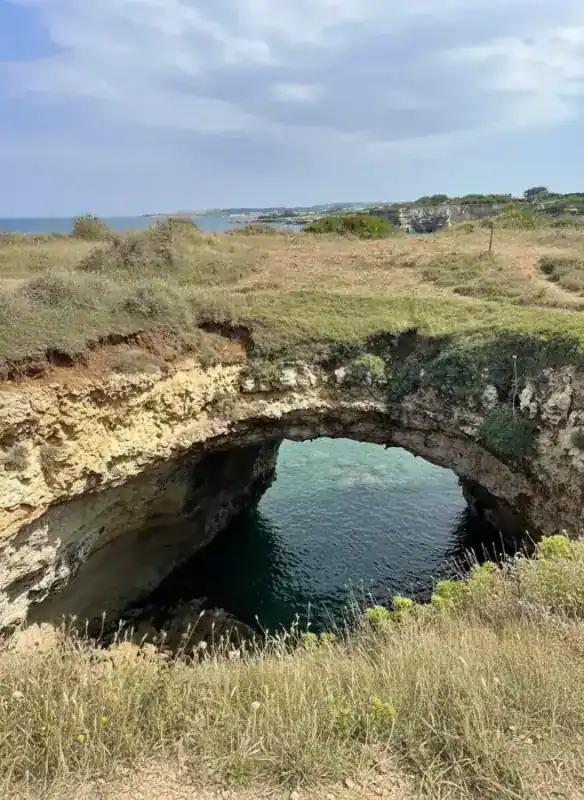
Just beyond the whitewashed walls and Byzantine mosaics of Otranto, the Adriatic coastline reveals one of its most intimate secrets. Grotta dell'Eremita is a sea cave where limestone geology and centuries-old devotion intersect, offering visitors a rare glimpse into the solitary spiritual life that once thrived along these rugged cliffs. The small chapel carved directly into the rock face tells a story of hermits who sought divine connection in the raw beauty of the coast.
Where Stone Becomes Sanctuary
The chapel inside Grotta dell'Eremita is no grand cathedral it's a humble, hand-carved space that feels like an extension of the cave itself. The rock walls retain their natural texture, yet deliberate human touches niches for candles, a simple altar transform the grotto into a place of quiet reverence. Light filters in from the cave opening, casting shifting patterns across the stone as the sea reflects and refracts the Mediterranean sun.
Standing inside, you can almost hear the prayers of the hermit who once called this place home. The silence is profound, broken only by the gentle lapping of waves below.
The Hermit's Perch Above the Adriatic
Reaching the cave often involves a short scramble along the coastal path south of Otranto's historic center, where the cliffs rise dramatically from the crystalline water. The setting is spectacular: jagged limestone formations jut into the turquoise sea, and wild Mediterranean scrub clings to every crevice. This stretch of coast is less developed than the sandy beaches to the north, offering a wilder, more contemplative atmosphere.
The cave's position perched above the waves yet sheltered from the open sky made it an ideal retreat for solitary monks seeking isolation and spiritual focus. Today, it offers visitors the same sense of stepping outside ordinary time.
What to Bring and When to Visit
Timing your visit can make all the difference. Early morning or late afternoon brings softer light and fewer visitors, allowing you to experience the cave's meditative quality without interruption. The path can be rocky and uneven, so sturdy footwear is essential flip-flops won't cut it here.
- Wear closed-toe shoes with good grip for the coastal path and cave entrance
- Bring a flashlight or phone light to examine the carved details inside the chapel
- Visit in spring or autumn when the wildflowers bloom and the heat is gentler
- Combine your visit with a walk to nearby Baia dei Turchi or the Orte lighthouse
- Respect the site's spiritual history keep voices low and leave no trace
Beyond the Cave: Otranto's Coastal Treasures
Grotta dell'Eremita is just one point of interest along Otranto's remarkable shoreline. A few kilometers north, the protected bay of Baia dei Turchi offers pristine sand and shallow turquoise water framed by pine forest. To the south, the dramatic cliffs continue toward Capo d'Otranto, the easternmost point of the Italian mainland, where a historic lighthouse stands sentinel over the channel separating Italy from Albania.
Back in Otranto itself, the cathedral's famous mosaic floor and the atmospheric old town provide the perfect counterpoint to the wild coast. Many visitors find that the hermit's cave deepens their appreciation for the town's layered history Byzantine, Norman, Ottoman and the enduring human impulse to seek meaning in beautiful, harsh places.