
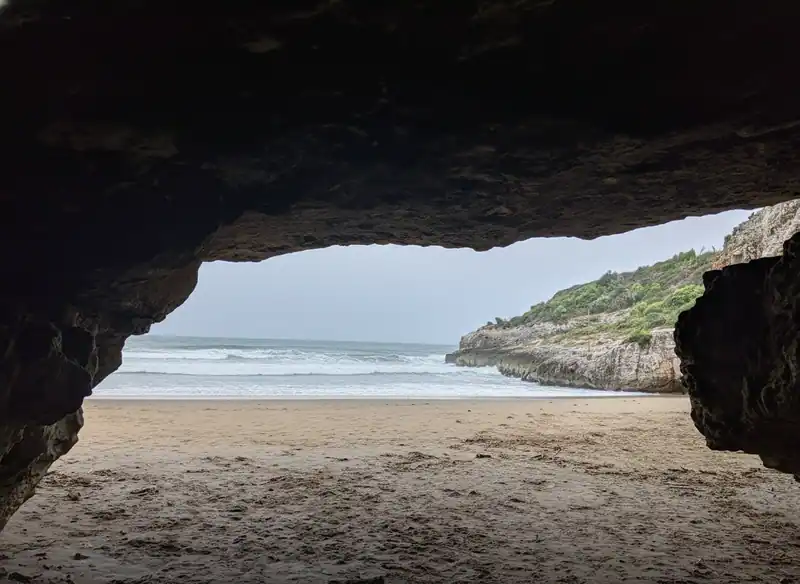
Tucked along the dramatic coastline of Peschici on the Gargano peninsula, Grotta del Turco offers a rare window into millions of years of geological history. This natural cavern, carved by wind and waves, stands as a testament to the raw power of the Adriatic Sea. Whether you arrive by boat or scramble down the rocky shore, the cave's cool interior and distinctive formations create an experience that feels worlds away from the sun-drenched beaches above.
Where Stone Meets Story
The cave takes its name from local legend—stories whisper of Turkish pirates who once used these hidden grottoes as shelter during raids along the coast. Today, the only invaders are curious travelers and the occasional gull. The walls bear the signature of time: limestone sculpted into waves, pockets, and curtains by centuries of salt spray and tide.
Stand at the cave's mouth during late afternoon, and you'll witness light playing across the water in shades of sapphire and jade. The acoustics inside amplify the rhythmic crash of waves, creating a natural symphony that locals say never repeats the same pattern twice.
A Geologist's Playground
What makes Grotta del Turco particularly compelling is the visible record of the region's transformation. The rock strata reveal layers of ancient seabeds, compressed coral, and fossil fragments—each band a chapter in the Gargano's story. Speleology enthusiasts will notice the stalattiti formations near the upper recesses, though these are more modest than in the region's inland caves.
The cavern's ceiling reaches roughly eight meters at its highest point, creating a natural dome that echoes with the sounds of the sea. In spring and early summer, seabirds nest in the higher crevices, adding their calls to the cave's soundtrack.
Planning Your Cave Exploration
The best way to reach Grotta del Turco is by joining one of the gite in barca—boat tours that depart from Peschici's marina and cruise the coastline, stopping at multiple caves. These typically run from May through September when the sea is calm. For the more adventurous, a rocky footpath descends from the clifftop road, though sturdy shoes and caution are essential.
Time your visit for mid-morning or late afternoon to avoid the midday glare and catch the cave at its most photogenic. The surrounding coastline is dotted with other attractions worth exploring in a single outing:
- Baia di Peschici – the town's main beach, perfect for a swim after cave exploring
- Trabucchi – traditional fishing platforms clinging to nearby cliffs
- Centro Storico – Peschici's whitewashed old town, a maze of narrow streets and sea views
- Grotta di Manaccora – another striking cave formation just a few kilometers south
- Foresta Umbra – a cool mountain forest retreat inland, ideal for hot afternoons
What to Bring Along
Pack a waterproof phone case if you're arriving by boat—the spray can be vigorous, and you'll want photos. A small torch or headlamp helps reveal details in the cave's darker corners. Locals recommend bringing water shoes if you plan to wade; the rocks can be slippery with algae, especially near the waterline.
The cave suits everyone from families with older children to solo travelers seeking a quiet moment with nature. The lack of artificial lighting or crowds preserves the site's wild character, making it feel like a discovery rather than a destination.