
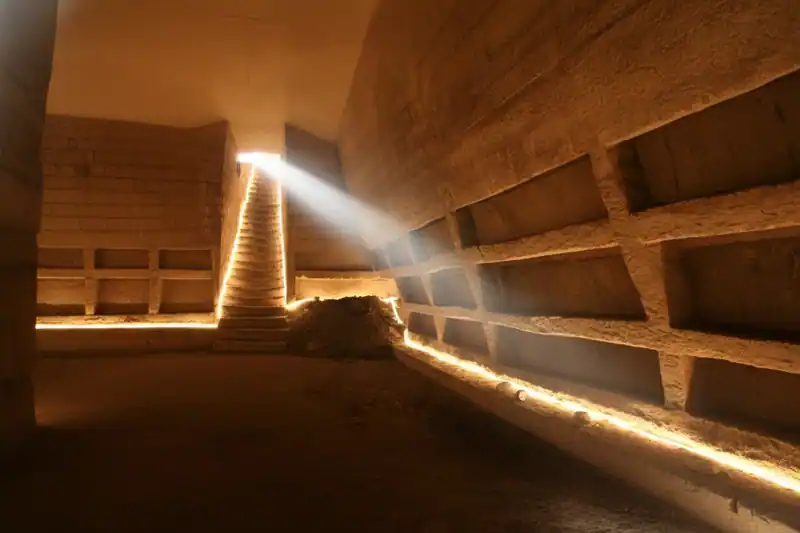
Descending into Gravina Sotterranea is like stepping through a portal into the region's forgotten past. Carved deep into the limestone cliffs of Gravina in Puglia, this underground labyrinth of cave dwellings tells the story of communities who made their homes in stone from prehistoric times through the medieval era. The cool, dim passages and hand-carved chambers offer a visceral connection to the ingenuity and resilience of those who once sheltered here.
A Living Archive Beneath the Ravine
The narrow passages twist and turn through layers of geological and human history. Each chamber reveals evidence of the people who carved these spaces by hand, adapting the natural limestone to create homes, storage rooms, and communal spaces. The walls bear the marks of tools, the soot of ancient fires, and the architectural details that transformed raw stone into livable shelter.
Light filters in from openings above, illuminating the textured surfaces and casting dramatic shadows. The temperature remains constant year-round, a reminder of why these caves offered such practical refuge from both summer heat and winter cold.
- Hand-carved nicchie (niches) that once held oil lamps and everyday objects
- Ancient hearths blackened by centuries of cooking fires
- Carved channels and cisterns for collecting and storing water
- Connecting passages that linked different family dwellings
- Evidence of multiple occupation periods layered one atop another
Walking Through Millennia
The tour route winds through chambers of varying sizes, each offering glimpses into different eras of habitation. Some spaces show the rough work of earliest settlers, while others display more sophisticated architectural elements from Byzantine and medieval periods. The sheer effort required to create these dwellings becomes palpable as you navigate the uneven stone floors and low ceilings.
Guides share stories of how these underground communities functioned, from daily domestic life to times of siege when the caves became defensive refuges. The acoustics shift dramatically from chamber to chamber, creating an almost cathedral-like atmosphere in larger spaces.
Beyond the Underground
After emerging from the caves, the dramatic gravina (ravine) that gives the town its name stretches before you. The vertical canyon walls reveal countless more cave openings, many still unexplored. The medieval bridge spanning the gorge offers stunning views of this unique landscape where nature and human history intertwine.
Consider timing your visit for late afternoon when the sun illuminates the cliff faces in warm golden light. Wear sturdy shoes with good grip, as the stone passages can be slippery. The nearby Sassi neighborhood and the Romanesque cathedral are worth exploring to complete your understanding of how this community evolved from cave to stone-built architecture.
Gravina in Puglia sits along the ancient Via Appia, making it an easy stop when traveling between Matera and the Adriatic coast. The town's historic center retains a quiet, authentic character far removed from busier tourist circuits.