
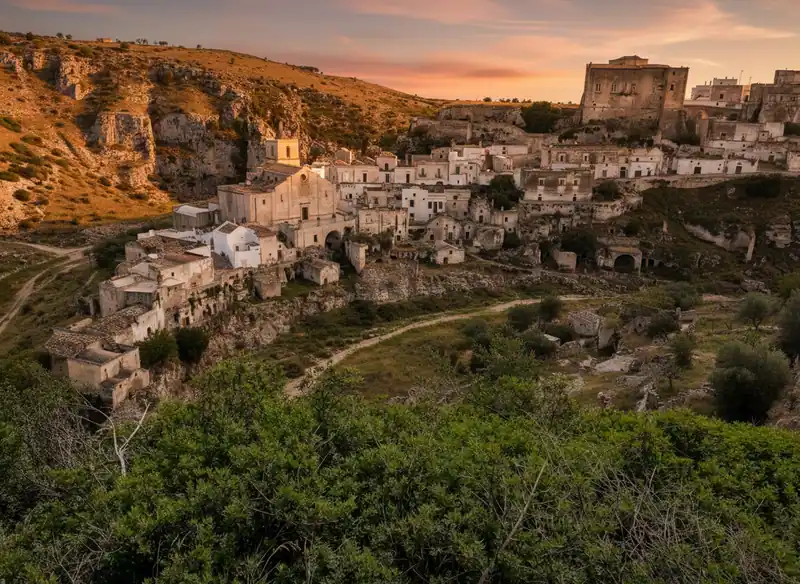
Carved into the dramatic landscape of Ginosa in the Province of Taranto, the Gravina di Ginosa reveals a hidden world where rock and human history intertwine. This ancient ravine system, sculpted by water and time over millennia, shelters the haunting remains of a troglodyte settlement that speaks to the resourcefulness of early inhabitants. Walking through this limestone canyon feels like stepping through a portal where geology and archaeology merge into a single, breathtaking narrative.
A Canyon Frozen in Time
The ravine itself is a geological masterpiece, its sheer walls rising dozens of meters and carved with natural caves, overhangs, and erosion patterns that tell stories spanning thousands of years. The tufa stone, soft enough to carve yet durable enough to last, became both shelter and canvas for the communities who made this their home. As you descend into the gorge, the temperature drops and the modern world fades, replaced by the whisper of wind through stone chambers.
Light plays tricks here, filtering through openings to illuminate rock-hewn staircases, ancient doorways, and the occasional fresco fragment still clinging to a cave wall. The silence is profound, broken only by birdsong echoing off the limestone.
Dwellings Carved from Living Rock
The settlement within the Gravina showcases an architectural tradition born of necessity and ingenuity. Families didn't build homes they excavated them, hollowing out multi-room dwellings complete with niches for oil lamps, ventilation shafts, and even primitive drainage systems. Some caves served as homes, others as stables or storage, and still others as places of worship, their walls bearing the faint traces of Byzantine-era religious iconography.
- Multi-level cave complexes connected by stone-cut stairs and pathways
- Rock-carved mangers and feeding troughs showing where animals lived alongside people
- Byzantine frescoes and carved crosses marking sacred spaces
- Natural springs that provided water to the settlement for centuries
- Panoramic viewpoints from the canyon rim overlooking the entire ravine system
Walking Among Geological Wonders
Beyond the archaeological treasures, the Gravina itself is a lesson in deep time. The stratified rock walls reveal layers deposited when this region lay beneath an ancient sea, and fossils occasionally peek from the stone. The ravine's formation carved by the relentless action of the Ginosa stream demonstrates erosion's patient power to reshape entire landscapes.
Bring sturdy shoes and a sense of adventure; the paths can be uneven, and some cave entrances require a bit of scrambling. Early morning or late afternoon offers the best light for photography and cooler temperatures for exploration. Combine your visit with a walk through Ginosa's historic center above, where you'll find traditional masserie architecture and local bakeries selling pane di Ginosa, a bread with roots as ancient as the ravine itself.