
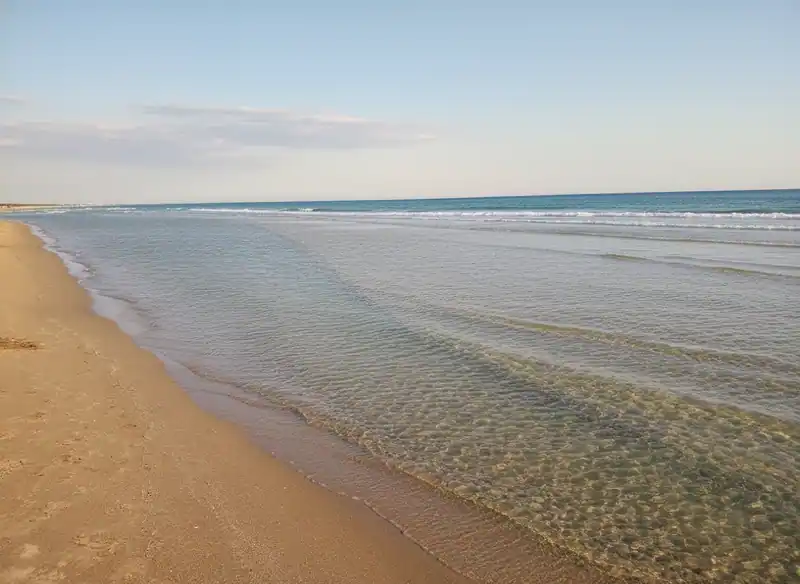
Ginosa Beach stretches along the Ionian coast in a region where Puglia meets Basilicata, offering a rare blend of fine golden sand and dramatic rocky outcrops that rise from the shoreline like natural sculptures. The water here glows in shades of turquoise and aquamarine, shallow enough near the shore for easy wading and deep enough beyond the rocks for a real swim. It's a place that feels both wild and welcoming, drawing beachgoers who crave beauty without the trappings of overdevelopment.
A Coastline Shaped by Stone and Sea
The beach's most striking feature is the way natural rock formations punctuate the sand, creating sheltered coves and tidal pools that shimmer in the midday sun. Some of the stones are smooth and warm, perfect for stretching out with a book; others are jagged and layered, inviting exploration at low tide. The interplay between sand and stone gives every visit a sense of discovery.
The shoreline shifts subtly as you walk—patches of soft sand give way to pebbly stretches, then back to powder-fine expanses ideal for sunbathing. This natural variety means you can choose your own microclimate, whether you want full sun on open sand or dappled shade beside a rock.
Swimming in Turquoise Clarity
The water at Ginosa is exceptionally clear, the kind that invites you to wade in up to your waist and watch your toes shimmer on the sandy bottom. The seabed is mostly sandy with occasional rocky patches, so water shoes can be handy if you're venturing toward the stone outcrops. In summer the Ionian here is warm and calm, particularly in the morning before the afternoon breeze picks up.
Snorkelers will find interest around the rocks, where small fish dart between crevices and algae cling to the stone. It's not a coral reef, but the life that thrives in these shallow waters adds a layer of intrigue to an afternoon swim.
What to Bring and When to Come
Because Ginosa Beach is largely undeveloped, you'll want to pack essentials: sun protection, plenty of water, snacks, and an umbrella or beach tent if you plan to stay through midday. There are no permanent facilities or beach clubs here, which preserves the natural character but also means self-sufficiency is key.
- Arrive early in the morning for the calmest water and the best light for photography
- Bring water shoes if you want to explore the rocky areas comfortably
- Pack out all your trash—there are no bins, and keeping the beach pristine is a shared responsibility
- Consider combining your visit with a trip to the nearby ravines and cave dwellings of the inland town of Ginosa, a short drive away
- Late afternoon offers softer light and fewer crowds, ideal for a sunset walk along the sand
Beyond the Beach: Exploring the Surrounding Area
The Ginosa coastline sits in a quieter pocket of Puglia's Ionian shore, away from the busier resort towns to the south. Inland, the ravines (gravine) carved into the limestone plateau are home to ancient cave settlements and hiking trails that offer a complete contrast to the beach's open horizons. It's worth dedicating a day to both experiences—morning by the sea, afternoon exploring the cool stone canyons.
To the west, the coastal road winds toward Taranto and its rich archaeological heritage; to the east, smaller beaches and fishing villages dot the shoreline, each with its own character. Ginosa Beach rewards those who seek out the less-traveled stretches of Puglia's coast, where the landscape still feels shaped more by nature than by tourism.