
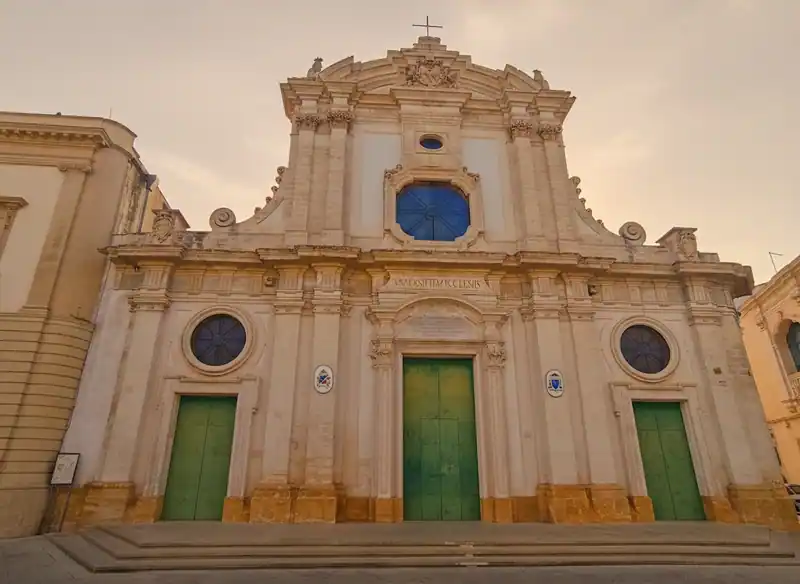
In the heart of Nardò's sun-drenched centro storico, the Duomo di Santa Maria Assunta rises like a stone hymn to Baroque grandeur. Its facade, rebuilt in the eighteenth century, anchors Piazza Pio XI with confident columns and sculpted saints, while inside, an unexpected world of gilded stucco, frescoed vaults, and marble altars unfolds beneath soaring arches. This is not simply a church it is a living archive of art, faith, and civic pride that has shaped Nardò for more than a millennium.
A Theater of Baroque Light and Shadow
Step through the carved wooden doors and your eyes need a moment to adjust. Light filters through high windows, illuminating chapels adorned with painted putti, twisted columns, and polychrome marble. The nave stretches ahead in a rhythm of arches and pilasters, each bay revealing another layer of devotional art. Locals still gather here for Sunday Mass, their whispered prayers echoing off stone that has absorbed centuries of ritual.
The high altar is a masterwork of inlaid stone and gilded wood, framing a canvas that commands reverence even from non-believers. Side chapels beckon with intimate altarpieces and flickering votive candles, each a miniature universe of Baroque theatricality. Take your time; this is a place built for contemplation, not hurried selfies.
What to Look For Inside
Art historians and casual visitors alike find themselves captivated by the cathedral's layered history. The building stands on the foundations of earlier churches, and fragments of Romanesque and Gothic stonework peek through later renovations. Look for these subtle traces as you wander:
- The crypt, with its low vaulted ceilings and ancient columns, offers a cool, meditative counterpoint to the ornate upper church
- Painted wooden statues from the seventeenth and eighteenth centuries, paraded through Nardò's streets during Holy Week processions
- Frescoed lunettes and ceiling panels depicting biblical scenes in vivid, almost theatrical compositions
- The carved choir stalls, their walnut panels polished by generations of canons and priests
- A sense of stillness rare in tourist-heavy Puglia most visitors head straight to the coast, leaving Nardò's treasures blissfully uncrowded
Nardò Beyond the Cathedral Steps
After your visit, wander the labyrinth of lanes radiating from Piazza Pio XI. Nardò's centro is a masterclass in honey-colored Lecce stone, with palazzi bearing coats of arms, wrought-iron balconies draped in geraniums, and tiny workshops where artisans still practice traditional crafts. The nearby Piazza Salandra, shaped like a perfect oval and ringed with baroque facades, feels like a stage set waiting for an opera to begin.
If you're exploring the Ionian coast, Nardò makes an ideal inland counterpoint to beach days at Santa Caterina or Santa Maria al Bagno, both just fifteen minutes away. The town also lies on the route between Lecce and Gallipoli, so it's easy to weave into a day of discovery. Come in the late afternoon when the light turns the stone walls amber, and stay for an aperitivo in one of the cafes spilling onto the piazza locals sipping Spritz and debating football while the cathedral bells mark the hour.