
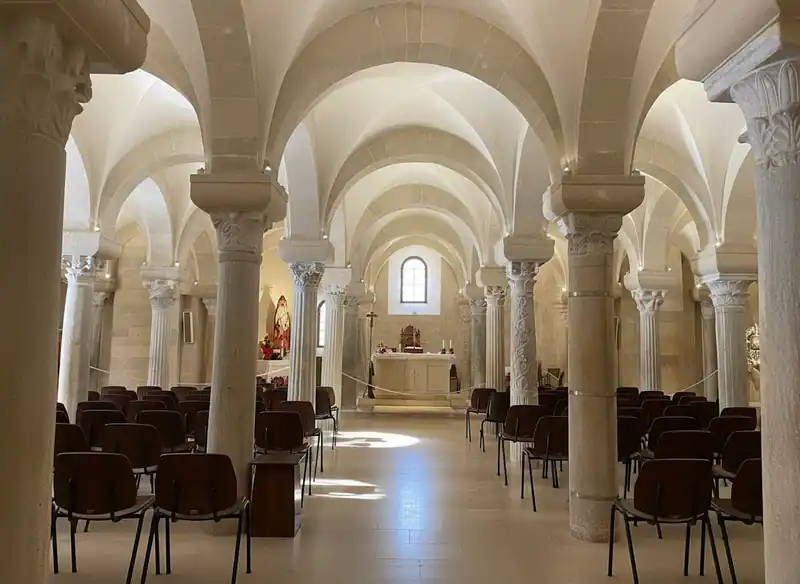
Standing proud in the heart of Otranto's old town, the Duomo di Santa Maria Annunziata is far more than a place of worship. It's a living chronicle of faith, art, and resilience that has witnessed centuries of invasions, devotion, and rebirth. The moment you step through its doors, you're enveloped in a quiet reverence that blends seamlessly with awe at the artistic treasures within.
A Floor That Tells a Thousand Stories
The cathedral's most astonishing feature is underfoot. The pavimento musivo, a vast 12th-century mosaic floor, sprawls across the entire nave in a vibrant tapestry of biblical scenes, mythological creatures, and medieval symbolism. Created by the monk Pantaleone between 1163 and 1165, this masterpiece depicts the Tree of Life alongside knights, elephants, Alexander the Great, and King Arthur.
Walking across this ancient artwork feels like traversing a medieval manuscript brought to life. The colors remain vivid, the details intricate, and the storytelling captivating. It's one of the finest examples of Romanesque mosaic art in all of Italy, and it demands time and attention to appreciate fully.
- The Tree of Life runs the length of the nave, symbolizing the connection between heaven and earth
- Look for the depiction of Noah's Ark, complete with animals boarding two by two
- Notice the zodiac symbols and months of the year woven into the design
- The elephant carrying a tower represents exotic knowledge from distant lands
- Hidden among the patterns are scenes from the lives of saints and biblical prophets
Where Baroque Meets Medieval Stone
While the cathedral's origins are Romanesque, later centuries added layers of baroque ornamentation. The main altar gleams with gilded details, and side chapels showcase paintings and sculptures from the 17th and 18th centuries. This blend of architectural styles creates a visual dialogue between austerity and opulence, between medieval simplicity and baroque drama.
The Chapel of the Martyrs holds particular significance. Here, behind glass, rest the bones of 800 citizens of Otranto who were beheaded in 1480 for refusing to convert after the Ottoman invasion. This somber memorial adds a profound layer of historical gravity to your visit, a reminder of the town's strategic importance and the price of faith.
Light, Stone, and Silence
The cathedral's atmosphere shifts with the time of day. Morning light filters through narrow windows, casting soft beams across the ancient mosaics. Late afternoon brings a golden glow that warms the stone columns and illuminates the baroque altarpieces. Even in peak summer, the thick walls maintain a cool, contemplative temperature.
Take a moment to sit in one of the wooden pews and simply absorb the space. The acoustics carry the faintest whisper, and the air feels weighted with centuries of prayers. It's a place that invites stillness, reflection, and a deeper connection to the layers of history that define Otranto.
- Visit early in the morning for fewer crowds and the best natural light on the mosaics
- Dress modestly shoulders and knees should be covered as a sign of respect
- Bring a small flashlight or use your phone to illuminate darker corners of the floor mosaics
- Combine your cathedral visit with a walk through Otranto's centro storico and down to the waterfront
Beyond the Cathedral Doors
After exploring the Duomo, Otranto's compact historic center beckons. The Aragonese Castle stands just steps away, and the town's whitewashed lanes lead down to the turquoise waters of the Adriatic. The cathedral sits perfectly within a half-day itinerary that includes the castle, the waterfront promenade, and a leisurely lunch at one of the seafood restaurants overlooking the harbor.
For those drawn to sacred art and medieval history, this cathedral ranks among Puglia's most essential cultural sites. It offers a rare opportunity to stand on a mosaic floor that has been walked upon for nearly a millennium, and to witness the enduring power of art, faith, and memory.